
BSIS License Security Guard California: What It Is and Why It Matters
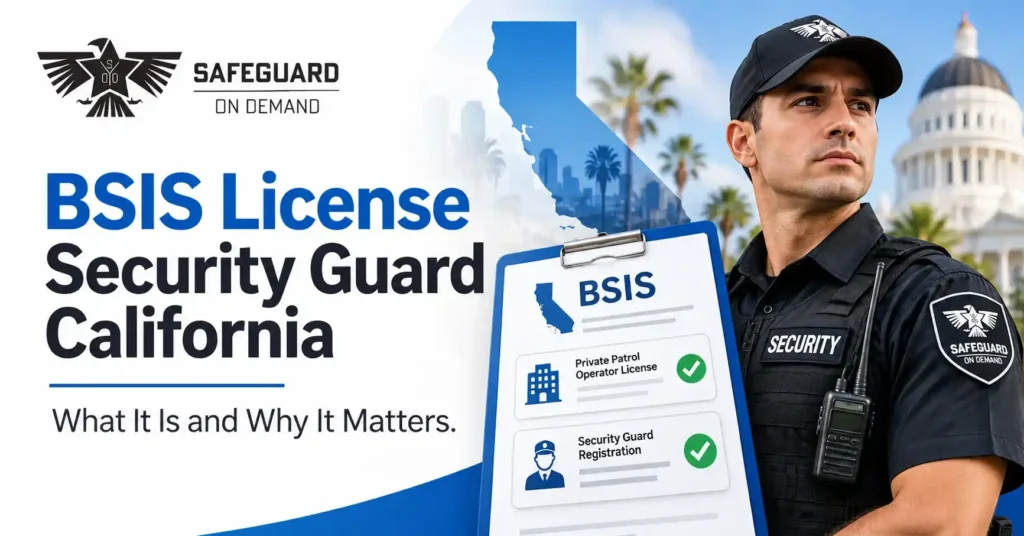
When researching BSIS license security guard California, most business owners are really asking a simple question: Can I trust the security company I am about to hire? A license is more than something a company can mention on its website. It is a credential you can check before giving a security provider access to your property, employees, residents, customers, or guests. In California, the Bureau of Security and Investigative Services (BSIS) operates under the Department of Consumer Affairs and regulates private security services. For a buyer, two separate credentials are important to understand. The Private Patrol Operator license applies to the security company, while the individual officer generally holds a Security Guard Registration, commonly known as a guard card. BSIS provides a public tool where these license records can be verified. Knowing the difference makes it easier to check what a security provider is actually licensed to do before you sign a contract. What Is BSIS and What Does It Regulate? When a security company mentions BSIS, it is referring to the Bureau of Security and Investigative Services, a California agency within the Department of Consumer Affairs. BSIS oversees licensing and registration for several areas of the private security industry, including security guards and Private Patrol Operators. For someone hiring security, two credentials are especially important to understand. The first is the Private Patrol Operator (PPO) license, which applies to a company that provides private security services. The second is the Security Guard Registration, which applies to the individual officer. BSIS uses the formal term Security Guard Registration, although people commonly call it a California guard card or security guard license. That difference matters when you are comparing security vendors. A BSIS registered security guard and a BSIS licensed security company are not the same thing. Checking the appropriate credential for both the company and the officers can give you a much clearer picture of who you are hiring. The Two BSIS Credentials a Buyer Should Understand When you hire security in California, it helps to separate the company’s credentials from the officer’s credentials. They serve different purposes, and checking one does not replace checking the other. The Private Patrol Operator License Belongs to the Company A Private Patrol Operator (PPO) license is the company level license for a business that provides private security services. BSIS describes a Private Patrol Operator as a business that protects people or property or prevents theft. The company must meet the Bureau’s licensing requirements before operating as a PPO in California. For a buyer, this is the company credential to verify when you are comparing security vendors. It tells you that the business has a BSIS license record that can be checked through the state’s verification system. The Security Guard Registration Belongs to the Officer The individual security officer has a separate Security Guard Registration, commonly called a guard card. BSIS states that security guards are employed by licensed Private Patrol Operators or private security employers. The registration is tied to the individual officer, not to the security company. Credential Who holds it Why it matters to the buyer Private Patrol Operator license Security company Helps you verify that the company providing contract security has the appropriate BSIS license Security Guard Registration Individual officer Helps you verify that the guard assigned to your property has the required BSIS registration This distinction is important when checking a BSIS licensed security company. A company can have a PPO license, while each officer working under that company has a separate Security Guard Registration. BSIS provides a public verification tool that includes both Private Patrol Operator and Security Guard license types. What Does BSIS Licensing Actually Tell You as a Buyer? A BSIS license gives you something more useful than a claim on a security company website: a state record that you can verify. For a business owner, property manager, or facility manager, that creates a clearer starting point when comparing security providers. For the company, a licensed Private Patrol Operator must maintain commercial general liability insurance with at least one million dollars in coverage for each occurrence. BSIS also requires proof of that insurance to be provided to the Bureau. The individual officer is subject to a separate Security Guard Registration process. BSIS requires applicants to undergo criminal history checks through the California Department of Justice and the Federal Bureau of Investigation, as well as complete required training before registration is issued. It is important to keep these credentials separate. A guard card does not prove that the security company is insured. The insurance requirement applies to the licensed Private Patrol Operator. Checking both the company and the officers gives you a more complete picture before you hire. How to Verify a Security Company’s BSIS License Yourself You do not have to take a security company’s word for it. California provides a public Verify a License tool through the Department of Consumer Affairs, allowing you to check license records for companies and individual professionals. The search includes Private Patrol Operator and Security Guard license types. Step 1: Ask for the Company’s PPO Number Start by asking the security company for its legal business name and Private Patrol Operator license number. Having this information makes the search easier and helps you compare the record with the information in the company’s proposal or contract. Step 2: Open the Official License Search Go to the BSIS Verify a License page rather than relying on a third party directory. The state search lets you select the license type and enter information to narrow the results. Step 3: Select Private Patrol Operator Choose Private Patrol Operator from the available license types. You can search using the company information you received from the vendor. Step 4: Compare the License Record Make sure the business name and license information match the company you are considering. The California Department of Consumer Affairs license search provides the current status of a license record and can also show whether disciplinary action such as suspension or revocation
Armed Security Guard Services in Orange County, California: The Complete 2026 Guide
Everything Orange County businesses need to know about armed security guard services: California BSIS requirements, who needs armed vs. unarmed officers, 2026 pricing, industries served, and how to vet a licensed provider.
How to Hire a Licensed Security Guard Company in California
Introduction Knowing how to hire a licensed security guard company in California starts with more than comparing hourly rates. A company may look professional on a website, but you still need to confirm its license, insurance, guard credentials, supervision, and service standards before signing a contract.California regulates private security businesses and personnel through the Bureau of Security and Investigative Services (BSIS). BSIS provides an official Verify a License tool that consumers can use to check companies and individual security guards. This guide explains what to check before hiring a security provider, including the company license, security guard registration, insurance, and required documentation. You will also learn which questions to ask, how to compare quotes, what warning signs to watch for, and how to choose a security company that fits your property and coverage needs. Why Licensing Matters When Hiring a Security Company in California Before comparing prices, verify that the security company is properly licensed. In California, the Bureau of Security and Investigative Services (BSIS) regulates private security businesses and personnel under the Private Security Services Act and related state rules. BSIS also provides a public license verification system for consumers. It is important to understand the difference between a company license and an individual registration. A company that contracts security services to customers generally operates as a Private Patrol Operator (PPO). The individual officers working for that company have their own security guard registration, commonly called a guard card. BSIS states that security guards working for a PPO must have valid registration. Checking these credentials helps reduce practical risks for a buyer. An unverified company may create questions about insurance, accountability, and who is responsible when a problem occurs. BSIS also provides a process for reporting suspected unlicensed activity and complaints, giving buyers an important way to check a provider before signing a contract. How to Verify a Security Guard Company License in California Before comparing prices, verify that the security company is properly licensed. In California, the Bureau of Security and Investigative Services (BSIS) regulates private security businesses and personnel under the Private Security Services Act and related state rules. BSIS also provides a public license verification system for consumers. It is important to understand the difference between a company license and an individual registration. A company that contracts security services to customers generally operates as a Private Patrol Operator (PPO). The individual officers working for that company have their own security guard registration, commonly called a guard card. BSIS states that security guards working for a PPO must have valid registration. Checking these credentials helps reduce practical risks for a buyer. An unverified company may create questions about insurance, accountability, and who is responsible when a problem occurs. BSIS also provides a process for reporting suspected unlicensed activity and complaints, giving buyers an important way to check a provider before signing a contract. How to Verify a Security Guard Company License in California Before hiring a security provider, take a few minutes to verify its license through the official BSIS Verify a License tool. This is one of the simplest ways to confirm that you are dealing with a legitimate BSIS licensed security company. Use the BSIS Verify a License Tool Start by asking the company for its legal business name and license number. Then open the official BSIS Verify a License page and select Private Patrol Operator when checking a company that provides contract security. Search the business information and make sure the name and license details match the company you are speaking with. BSIS also allows searches for individual Security Guard registrations. What Does a PPO License Confirm? A Private Patrol Operator (PPO) license is the company level credential for a business that protects people or property or prevents theft. California states that a business cannot operate as a PPO without the proper license, unless an exemption applies. What Does a Guard Card Confirm? A guard card relates to the individual officer’s BSIS registration. Security guards must meet BSIS registration requirements, including a criminal history check and required training. What If the Company Information Does Not Match? Treat an expired record, name mismatch, refusal to provide license information, or unclear subcontracting arrangement as a reason to stop and verify the details before signing a contract. What Licenses and Insurance Should a California Security Company Have? Before hiring a security provider, check both the company credentials and the credentials of the officers assigned to your property. A contract security company should have the appropriate Private Patrol Operator (PPO) license, while security guards should have current BSIS registration. California requires PPO licensees to confirm that employees performing security guard duties have valid registration. Private Patrol Operator License The PPO license is the company level credential for businesses that provide private security services. Ask for the license information and verify it through BSIS before signing a contract. Security Guard Registration Each officer should have valid BSIS security guard registration. Registration includes a criminal history background check and required training. Additional Credentials for Specialized Assignments Some assignments may require additional BSIS credentials or training. Ask the company what qualifications are required for the specific duties at your property. Insurance and Workers’ Compensation BSIS requires licensed PPOs to maintain general liability insurance of at least $1 million for each occurrence. California employers with one or more employees generally must also maintain workers compensation coverage. Ask for current insurance documentation before signing a contract. Questions to Ask Before You Hire a Security Guard Company The right questions can tell you much more about a provider than a sales presentation. Before hiring a contract security company, ask: Can you provide your BSIS PPO license information? A legitimate provider should be able to give you its company license details so you can verify them with BSIS. Can I verify the license through BSIS? Use the official verification system rather than relying only on a certificate or information shown on a website. How do you verify the officers assigned to my property? Ask how
Cal/OSHA SB 553 Workplace Violence Prevention, What California Businesses Must Do in 2026
California businesses covered by SB 553 must have a written Workplace Violence Prevention Plan. Employers must also provide required training. They must identify and correct workplace violence hazards. They must have clear reporting and response procedures. They must investigate incidents and keep required records. SB 553 became enforceable on July 1, 2024. The law created California Labor Code Section 6401.9 and added new workplace violence prevention requirements for covered employers. Cal/OSHA is also developing a permanent workplace violence prevention standard for general industry. The Occupational Safety and Health Standards Board must adopt the new standard by December 31, 2026. This guide explains the main SB 553 requirements for California businesses in 2026. It covers the WVPP, workplace violence types, training, records, penalties, compliance steps, and the role of security services. Important: This article provides general information. It is not legal advice. Employers should review their specific situation with a qualified workplace safety or legal professional. SB 553 Key Takeaways California employers should understand these key requirements: Written WVPP: Covered employers must establish, implement, and maintain an effective written Workplace Violence Prevention Plan. Site specific plan: The WVPP must address the hazards and corrective measures for each work area and operation. Employee involvement: Employees must have a role in the workplace violence prevention process. Training: Covered employees must receive effective workplace violence prevention training. Incident log: Employers must maintain a Violent Incident Log for workplace violence incidents. Recordkeeping: Employers must maintain required workplace violence records. Reporting: Employers must provide procedures for reporting workplace violence hazards and incidents. Plan access: The WVPP must be available and accessible to employees and other authorized parties. Cal/OSHA enforcement: Cal/OSHA can enforce applicable SB 553 requirements. 2026 standard: California must adopt a permanent general industry workplace violence prevention standard by December 31, 2026. What Is California SB 553? California SB 553 is a workplace safety law. The law was signed on September 30, 2023. It amended California Labor Code Section 6401.7 and created Section 6401.9. The law requires covered employers to establish and maintain a written Workplace Violence Prevention Plan. The plan must address workplace violence hazards. It must also explain how the employer will prevent, report, respond to, and investigate workplace violence. The requirements became enforceable on July 1, 2024. What Is the Purpose of SB 553? SB 553 gives employers a framework for preventing workplace violence. The requirements focus on: Identifying workplace violence hazards Correcting identified hazards Reporting workplace violence concerns Training employees Responding to incidents Investigating incidents Keeping required records Reviewing and updating the workplace violence prevention plan SB 553 is not simply a requirement to create a document. The WVPP must be effective and specific to the workplace. What Is a Workplace Violence Prevention Plan? A Workplace Violence Prevention Plan is commonly called a WVPP. It is a written plan that explains how an employer will prevent and respond to workplace violence. Covered employers must establish, implement, and maintain an effective written WVPP. The plan must be specific to the hazards and corrective measures for each work area and operation. It must remain in effect at all times. A company can include its WVPP as a separate section of its Injury and Illness Prevention Program. It can also maintain the WVPP as a separate document. Who Must Comply With SB 553? SB 553 applies broadly to California employers, employees, places of employment, and employer provided housing. However, the law includes specific exceptions. Employers should review California Labor Code Section 6401.9 before deciding whether their workplace is covered. The rules can also differ for workplaces covered by other workplace violence requirements. For example, certain health care locations are subject to separate Cal/OSHA workplace violence requirements. Does SB 553 Apply to Small Businesses? Business size alone does not determine whether SB 553 applies. A small California business should review the law and its applicable exceptions. Employers should not assume that a workplace is exempt because it has a small number of employees. Does SB 553 Apply to Non Union Workplaces? Yes. Cal/OSHA states that the requirements apply to covered workplaces whether or not employees are represented by a union. Who Is Exempt From SB 553? SB 553 includes specific exceptions in California Labor Code Section 6401.9. The exceptions depend on the employer, workplace, and circumstances. Some workplaces are subject to other workplace violence requirements. Employers should review the specific statutory exceptions instead of assuming that their business is exempt. If coverage is unclear, a qualified workplace safety professional or legal adviser can help review the situation. What Are the 4 Types of Workplace Violence? Cal/OSHA identifies four types of workplace violence under Labor Code Section 6401.9. Type 1 Violence Type 1 violence involves a person who has no legitimate business at the workplace. This can include a person who enters or approaches the workplace with the intent to commit a crime. Type 2 Violence Type 2 violence involves customers, clients, patients, students, inmates, or visitors. The violence is directed at employees. Type 3 Violence Type 3 violence involves a present or former employee, supervisor, or manager. The violence is directed at another employee. Type 4 Violence Type 4 violence involves a person who does not work at the workplace but has or is known to have had a personal relationship with an employee. These four types help employers identify different workplace violence risks and plan appropriate prevention measures. What Must a California WVPP Include? A covered employer must create a written WVPP that meets the requirements of California Labor Code Section 6401.9. The plan should clearly explain how the workplace will prevent and respond to workplace violence. Important areas include: Employer responsibility for the plan Employee involvement Workplace violence reporting procedures Communication with employees Workplace violence hazard identification Hazard evaluation Corrective measures Emergency procedures Response procedures Incident investigation Training Recordkeeping Plan review and updates Access to the plan The plan must address the actual workplace. A generic document may not address the hazards of a particular location. Cal/OSHA states that the WVPP must
Armed vs Unarmed Security Guards in California: Which Is Right for Your Business?
Introduction When comparing armed vs unarmed security guards in California, the right choice depends on your property’s risk level, industry, and security goals. Armed security guards provide a stronger deterrent and are ideal for high risk environments, while unarmed security guards focus on prevention, access control, customer service, and maintaining a safe environment. Businesses across California choose different security solutions based on their daily operations. High risk locations like construction sites, warehouses, financial institutions, and cannabis dispensaries often require armed security guards, while offices, retail stores, hotels, schools, healthcare facilities, and residential communities usually benefit from unarmed security services. In this guide, you’ll learn the key differences between armed and unarmed security guards in California, including their responsibilities, BSIS licensing requirements, costs, benefits, and how to choose the right security solution for your business. Quick Comparison: Armed vs Unarmed Security Guards Feature Armed Security Guards Unarmed Security Guards Primary Role Protect people and high value assets Prevent incidents and monitor property Training BSIS Guard Card + Firearms Permit BSIS Guard Card BSIS Requirements Guard Card, Firearms Permit, firearm training Guard Card and required security training Average Cost Higher due to advanced training and risk More budget friendly Best For Banks, warehouses, construction sites, dispensaries, government facilities Offices, retail stores, hotels, schools, apartments, healthcare facilities Risk Level High risk environments Low to moderate risk environments This comparison helps businesses choose the right security guard services in California based on risk level, budget, industry, and security needs. What Is an Armed Security Guard? An armed security guard is a licensed security professional who carries a firearm to protect people, property, and high value assets. In California, armed guards must hold a BSIS Guard Card and a valid BSIS Firearms Permit before carrying a weapon while on duty. Their responsibilities include deterring crime, monitoring premises, controlling access, responding to emergencies, protecting valuable assets, and working with law enforcement when needed. Armed security guards are commonly deployed at construction sites, warehouses, banks, government facilities, cannabis dispensaries, and other high risk locations where a stronger security presence is essential. What Is an Unarmed Security Guard? An unarmed security guard is a licensed professional who protects people and property without carrying a firearm. In California, unarmed guards must obtain a valid BSIS Guard Card before working. Their primary role is to prevent crime through observation, patrols, access control, and quick incident reporting. They also assist visitors, enforce site rules, and provide excellent customer service. Unarmed security guards are ideal for offices, retail stores, hotels, schools, healthcare facilities, and residential communities where a visible security presence is needed without armed protection. Armed vs Unarmed Security Guards: Side-by-Side Comparison Feature Armed Security Guards Unarmed Security Guards Firearm Carry a licensed firearm No firearm Training BSIS Guard Card + Firearms training BSIS Guard Card training Licensing Guard Card + BSIS Firearms Permit BSIS Guard Card Authority Respond to high risk threats within legal limits Observe, report, and de-escalate incidents Deterrence Very high Moderate Cost Higher Lower Liability Higher due to firearm use Lower Best Industries Banks, warehouses, construction sites, dispensaries, government facilities Offices, retail stores, hotels, schools, healthcare, apartments Response Capability Better suited for high risk emergencies Best for prevention and routine security Customer Interaction Limited Frequent and service focused Choosing between armed vs unarmed security guards in California depends on your risk level, industry, budget, and security objectives. Both play an important role in protecting businesses when matched to the right environment. When Should You Hire Armed Security Guards? Armed security guards are the best choice for locations facing a higher risk of theft, violence, or valuable asset protection. In California, they are commonly used at: For these environments, armed security guards in California provide a higher level of protection, faster emergency response, and a stronger visual deterrent. When Should You Hire Unarmed Security Guards? Unarmed security guards are ideal for low to moderate risk environments where prevention, visibility, and customer service are the priority. In California, they are commonly hired for: For these locations, unarmed security guards in California provide a visible security presence, prevent incidents, and help create a safe, welcoming environment. California BSIS Requirements To work as a security guard in California, professionals must meet BSIS (Bureau of Security and Investigative Services) licensing requirements. Hiring a BSIS licensed security company in California helps ensure your guards meet all legal training and licensing standards. Cost Comparison in California Security Service Average Hourly Rate Unarmed Security Guards $25–$45/hour Armed Security Guards $45–$75+/hour Armed security guards typically cost more because they require a BSIS Guard Card, Firearms Permit, specialized training, ongoing qualifications, and higher insurance coverage. Unarmed security guards offer a more cost-effective solution for businesses that need professional protection in lower risk environments. Pros and Cons of Armed Security Guards Advantages Disadvantages Pros and Cons of Unarmed Security Guards Advantages Disadvantages Less effective in locations with elevated security risks. No firearm for high risk situations. Limited response to violent threats. How to Choose the Right Security Solution Choosing between armed and unarmed security guards in California depends on your business needs. Consider these key factors: A professional security assessment can help determine the best solution for your property, employees, and customers. Why California Businesses Choose Safeguard On Demand Businesses across California trust Safeguard On Demand for reliable, BSIS licensed security services tailored to their needs. We provide armed and unarmed security guards, mobile patrol, construction site security, warehouse security, commercial security, retail security, healthcare security, and hotel security. Every security plan is customized to your property, risk level, and operational requirements, with dependable coverage available throughout California. Frequently Asked Questions What is the difference between armed and unarmed security guards? Armed security guards carry a firearm and protect high risk locations, while unarmed security guards focus on prevention, patrols, and access control. Which is better, armed or unarmed security? It depends on your risk level, industry, and security needs. High risk sites often need armed guards, while low to moderate risk properties are usually well served
How Much Does a Security Guard Cost in California in 2026?
The average cost of a security guard in California ranges from $30 to $75 per hour, depending on the type of service and your security requirements. Factors such as armed or unarmed guards, location, coverage hours, property type, and the level of risk all play a role in determining the final price. Businesses across California hire professional security guards to protect employees, customers, property, and valuable assets while reducing the risk of theft, vandalism, and unauthorized access. In this guide, you’ll learn the average security guard hourly rates, the key factors that affect pricing, and practical tips to help you choose the right security solution for your business. Average Security Guard Cost in California The average cost of a security guard in California ranges from $30 to $75 per hour, depending on the type of security service, the level of risk, and your business requirements. Unarmed security guards are generally the most affordable option, while armed security guards, fire watch services, and specialized security assignments typically cost more due to additional training, licensing, and responsibilities. Security Service Average Hourly Cost Unarmed Security Guard $30–$45 Armed Security Guard $40–$75 Mobile Patrol $35–$60 Fire Watch Security $45–$70 Event Security $45–$55 Construction Site Security $35–$65 These prices are estimates and can vary based on your location, coverage hours, property type, number of guards required, and the level of security your site needs. The best way to receive accurate security guard pricing in California is through a customized security assessment and quote. What Factors Affect Security Guard Costs? The cost of hiring a security guard in California depends on your property’s security needs. Factors like location, service type, risk level, coverage hours, staffing, and equipment all influence the final price. Understanding these factors will help you estimate your budget and choose the right security solution for your business. Location in California Security rates vary across California. Businesses in cities like Los Angeles, San Francisco, and San Jose often pay more due to higher labor costs and increased demand. Local crime rates and site conditions can also impact pricing. Armed vs. Unarmed Guards Unarmed security guards are ideal for offices, retail stores, and residential communities. Armed security guards cost more because they require additional BSIS licensing and specialized training. They are commonly used for banks, dispensaries, and other high-risk properties. Type of Property Every property has different security needs. Construction sites, warehouses, hotels, shopping centers, and healthcare facilities all require different levels of protection, which directly affects the cost. Risk Level High-risk locations usually require experienced officers, additional patrols, or around-the-clock protection. Properties with valuable assets or frequent public access generally have higher security costs. Hours of Coverage Security pricing increases with the number of coverage hours. A single-day event costs much less than overnight or 24/7 security services. Long-term contracts may also offer better value. Number of Guards Needed Larger properties or busy facilities often need multiple security officers to monitor entrances, patrol the site, and respond quickly to incidents. More guards naturally increase the overall cost. Day, Night, Weekend, or Holiday Coverage Evening shifts, overnight coverage, weekends, and public holidays often have higher hourly rates due to staffing requirements and operational costs. Experience and Licensing Experienced, BSIS-licensed security guards provide better protection and faster incident response. Guards with specialized training or industry experience may have higher rates but also deliver greater value. Special Equipment Requirements Some assignments require patrol vehicles, body cameras, radios, access control systems, or surveillance monitoring. These additional resources can affect your final security service pricing. Security Guard Costs by Service Type The cost of security guard services in California varies depending on the type of protection your business needs. Basic on-site security is typically more affordable than specialized services like armed security or fire watch. The table below provides average hourly pricing for the most common security services. Security Service Average Hourly Cost Unarmed Security Guards $30–$45 Armed Security Guards $40–$75 Mobile Patrol Security $35–$60 Construction Site Security $35–$65 Warehouse Security $35–$60 Retail Security $30–$50 Hotel Security $30–$50 Apartment & HOA Security $30–$50 Healthcare Security $35–$60 Fire Watch Security $45–$70 Event Security $45–$55 Unarmed Security Guards Unarmed security guards typically cost $30 to $45 per hour and are a popular choice for offices, retail stores, hotels, apartment communities, and commercial properties. They provide access control, monitor visitors, patrol the premises, and help prevent theft and unauthorized access. Armed Security Guards Armed security guards usually cost $40 to $75 per hour due to additional BSIS licensing, firearms training, and higher-risk responsibilities. They are commonly assigned to banks, dispensaries, government facilities, and locations that require a stronger security presence. Mobile Patrol Security Mobile patrol security generally ranges from $35 to $60 per hour. Instead of remaining at one location, patrol officers inspect multiple areas, respond to alarms, and perform scheduled property checks. This option works well for warehouses, office parks, and commercial properties. Construction Site Security Construction site security typically costs $35 to $65 per hour, depending on the project’s size and risk level. Security officers help prevent theft, vandalism, trespassing, and equipment damage while maintaining a safe work environment throughout the project. Warehouse Security Warehouse security services usually range from $35 to $60 per hour. Guards monitor loading docks, secure inventory, control access points, and help protect valuable goods from theft and unauthorized entry. Retail Security Retail security guards generally cost $30 to $50 per hour. Their responsibilities include preventing shoplifting, assisting customers, monitoring entrances, and responding quickly to suspicious activity, helping businesses reduce losses and create a safer shopping environment. Hotel Security Hotel security services typically cost $30 to $50 per hour. Guards help protect guests, monitor public areas, manage access, and respond to emergencies, creating a safe and welcoming environment around the clock. Apartment & HOA Security Apartment and HOA security generally ranges from $30 to $50 per hour. Security officers patrol neighborhoods, monitor entrances, enforce community rules, and help residents feel safe while protecting shared amenities and property. Healthcare Security Healthcare security services usually cost $35
10 Types of Security Guard Services California Businesses Hire in 2026

A practical guide to the 10 types of security guard services California businesses hire most, what each one actually does on site, how BSIS licensing applies, and what each typically costs per hour.
Parking Lot Security Guards in Los Angeles: Protecting Cars and People
Parking lots and garages are where many property crimes and liability claims begin. Here is how parking lot security guards in Los Angeles keep vehicles and people safe, which coverage model fits your property, and what it costs.
Executive Protection Services in San Diego: Importance and Benefits

Corporate executive protection has moved from a perk to a governance issue. This guide explains what a real executive protection program includes, who in San Diego needs one, how California licenses the agents, and the benefits for the company.
Hotel Security Guards: A Complete Guide to Safety, Best Practices & Benefits
Running a hotel is more than offering comfortable rooms and good service. Guests want to feel safe at every step of their stay, and when security is overlooked, even the best amenities can fall short. That’s why hotel security guards play such a vital role. Not sure if hiring a security guard for hotel is the right decision? As a leading hotel security guard services company in California, we often ask hoteliers a few simple questions to help them decide, Can you ensure guests are fully safe at all times? Can your staff handle emergencies alone? Is your property protected from theft or damage? Whether you manage a five-star property in California or a boutique hotel elsewhere in the USA, these questions are more important than ever. No number of staff without proper training can handle unexpected criminal incidents or fire emergencies like professional hotel security guards. This guide will help you understand hotel security guarding, best practices, and the benefits of professional hotel security guard services. Why Hotel Security Guarding Matters Today? Think about what’s at stake in your hotel: guest safety, staff well-being, and valuable property. With hundreds of people checking in and out daily, hotels are open environments that can attract risks like theft, vandalism, unauthorized entry, or even emergencies. Here’s why hotel security guarding has become essential for hoteliers across the USA, Guest Confidence: Travelers want to know they’re protected. A visible security guard for hotel instantly builds trust. Reputation Protection: Negative incidents spread quickly through reviews and social media, which can harm bookings. Operational Safety: Staff members feel supported and more focused when security measures are in place. Emergency Preparedness: Trained hotel security guards know how to handle fires, medical situations, or threats calmly and effectively. In short, investing in hotel security is not just about avoiding problems. It’s about creating an environment where guests feel secure enough to return again and again. Key Responsibilities of a Hotel Security Guard You Must Know as a Hotelier A hotel security guard’s role goes far beyond standing at the entrance. Their daily responsibilities cover several areas critical to hotel operations, Guest and Staff Safety: Protecting guests from potential threats and ensuring staff members can carry out their work confidently. Surveillance Monitoring: Watching over entrances, exits, and public spaces using both physical presence and technology. Emergency Response: Acting quickly during fire alarms, medical emergencies, or unexpected disturbances. Theft Prevention: Guarding against property loss, whether it’s guest belongings, hotel assets, or retail items within the premises. Access Control: Making sure only authorized individuals can enter restricted areas like staff-only floors or storage rooms. Crowd Control: Managing large gatherings, conferences, or events hosted within the hotel. Having a trained hotel security guard ensures you’re not leaving these vital responsibilities to chance. Types of Hotel Security Guard Services Hotels are diverse, and so are their security needs. That’s why hotel security guard services are customizable. Here are some of the most common types, 1. Armed and Unarmed Hotel Security Guards Armed guards may be suitable for luxury hotels in high-risk areas. Unarmed guards provide safety and guest assistance in lower-risk environments. 2. Concierge-Style Security Guards who also help with guest inquiries, directions, and access while maintaining vigilance. Ideal for premium hotels where hospitality and safety meet. 3. Mobile Patrols For larger properties or resorts, mobile patrols keep an eye on multiple zones at once. Useful for detecting risks before they escalate. 4. Event-Specific Hotel Security Guarding Hotels often host conferences, weddings, and VIP events. Having guards trained in event security keeps everything under control. By choosing the right mix of guard services, you can match your hotel property’s needs without overextending budgets. Best Practices for Safety and Security in Hotels Hiring hotel security guards is the first step, but creating a comprehensive safety plan requires ongoing best practices. Here are strategies that top hotels across California and the USA rely on, 24/7 Security Presence: A round-the-clock team ensures guests feel protected at any hour. Training and Certification: Guards should be trained in hospitality, emergency procedures, and guest relations. Surveillance Systems: CCTV cameras, access controls, and alarm systems work best when paired with active guarding. Regular Safety Audits: Reviewing weak points in your hotel’s security setup prevents future incidents. Visible Patrols: Guests feel reassured when they see guards actively walking the property. Emergency Drills: Staff and guards working together on fire, evacuation, and crisis drills keep everyone prepared. By following these practices, you can set a clear standard for safety and security in hotels. Benefits of Hiring Professional Hotel Security Guards If you’re still weighing whether investing in professional hotel security guard services is worth it, here are the long-term benefits, 1. Guest Trust and Loyalty Guests feel safe knowing trained hotel security guards are on duty. This builds trust, encourages repeat visits, and often leads to positive reviews highlighting the property’s visible commitment to safety and security in hotels. 2. Property Protection From valuable decor to confidential guest information, professional hotel security guarding safeguard assets. With a security guard for hotel monitoring the property, the risk of theft, damage, or unauthorized access is significantly reduced. 3. Faster Response Times Emergencies can happen anytime. Trained hotel security guards respond immediately to incidents like fire alarms, medical emergencies, or disturbances, minimizing risk and preventing small issues from escalating into larger safety or reputation problems. 4. Crime Deterrence A visible security guard for hotel acts as a strong deterrent against theft, vandalism, and trespassing. Guests feel safer, and potential criminals are less likely to target a hotel with professional hotel security guarding. 5. Support for Staff Hotel employees feel secure knowing experienced hotel security guards are managing risks. Staff can focus on guest services while trained personnel handle safety concerns, emergency situations, and overall safety and security in hotels. 6. Higher Ratings and Reputation Safety directly impacts guest satisfaction and bookings. Hotels with professional hotel security guard services receive better reviews, higher ratings, and improved reputation, reinforcing guest confidence and long-term business growth.