
Telecommunications
Telecommunications Facility Security in California
Patrol routes, camera towers and on-site officers for central offices, cell sites and fiber facilities — protecting batteries, copper and the networks 911 depends on.
- Licensed & insured
- 24/7 dispatch
- No long-term contract
- Se habla español
Many-site patrols
Routes across cell sites and huts.
Battery & copper focus
The most-stolen equipment.
Monitored towers
Coverage where there is no staff.
Documented
Logs and incident reports.
Quick answer
How are telecom facilities protected from theft?
Unmanned central offices and cell sites are targeted for batteries, copper and fiber. California law makes malicious damage to telephone and cable lines — including backup batteries and power supplies — a crime (Penal Code §591), and makes it illegal for scrap dealers to knowingly hold stolen communications or broadband equipment (Penal Code §496e). Contract security protects these sites with route patrols, monitored camera towers and on-site officers at critical facilities.
Key facts
- Batteries, copper and fiber are top targets
- PC §591 covers damage to telecom lines
- PC §496e covers stolen broadband equipment
- Route patrols cover many small sites
- Outages can affect 911 access
The challenge
Small sites, big consequences
A single theft at an unmanned site can take down service for thousands.
Battery and copper theft
Backup batteries and copper are stripped from unmanned sites.
Service outages
Damage can interrupt service, including 911 access.
Many small sites
Hundreds of sites need patrol routes, not fixed posts.
Coverage options
Telecom security services
Combine services into one program.
Our standards
What every telecom post includes
The same standard on every shift.
Written post orders
Duties and escalation contacts approved by you.
Hourly photo reports
Timestamped photos and notes.
Supervisor field checks
Unannounced visits.
BSIS-licensed officers
Guard Card and background check.
Before you hire
Questions to ask a telecom security company
Here is how we answer.
| Ask the vendor | Safeguard On Demand |
|---|---|
| Can you patrol many sites? | Yes — route patrols with GPS check-ins. |
| Do you offer camera towers? | Yes, for sites without cameras. |
| Can you post officers at critical facilities? | Yes. |
| Will we get incident reports? | Yes, with photos. |
| Do you cover construction and upgrades? | Yes — including fire watch. |
| Is there a long-term contract? | No long-term contract. |
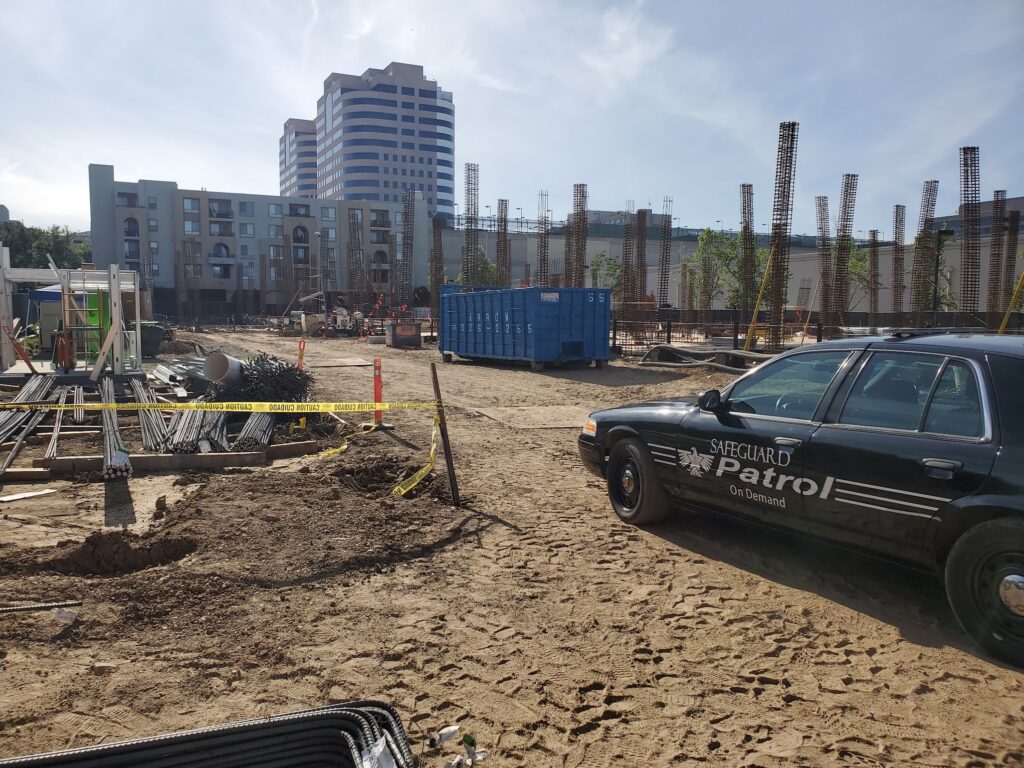
Who we protect
Telecom facilities we protect
Statewide
Telecom security across California
Served from the office nearest your site, with officers across 13 California counties.
How it works
How telecom security starts
A short, documented process.
01
Site review
Property, hours and incident history reviewed.
02
Post orders
Duties and contacts written and approved.
03
Officer orientation
Officers learn the site before day one.
04
Reports & review
Shift reports and regular check-ins.
Choosing coverage
Route patrols or towers?
For many small sites, route patrols are the most efficient option. Repeatedly hit sites benefit from camera towers and live monitoring. Critical central offices may need an on-site officer.
California requirements
California laws on telecom theft
Penal Code §591 makes it a crime to maliciously cut, remove or obstruct telephone and cable lines, including backup batteries and power supplies. Penal Code §496e makes it a crime for scrap dealers to knowingly possess stolen communications or broadband equipment, including fiber-optic cabling. Copper purchases by scrap dealers are restricted under Business & Professions Code §21608.5.
Every officer must hold a BSIS Guard Card and work for a licensed private patrol operator — 8 hours of Power to Arrest and Appropriate Use of Force training before registration, 32 more hours within six months, and 8 hours of continuing training every year. Verify any company or officer on the state’s DCA License Search.
Security checklist
- Site list and risk tiers
- Patrol routes and check-ins
- Cameras at repeat-target sites
- Alarm escalation
- Incident reporting
- Coordination with network ops
Budgeting
What affects the cost of telecom security
We do not publish one-size rates. These factors move the price.
Hours of coverage
24/7, nights only or business hours.
Armed vs. unarmed
Armed posts cost more.
Guard vs. patrol
Patrols cost less than full-time posts.
Site size
Acreage, buildings and entrances.
Location and risk
Site history and neighborhood.
Contract length
Short-term vs. ongoing.
Telecom security FAQs
For backup batteries, copper and equipment.
Yes, under Penal Code §591.
Yes, with route patrols.
Yes, at repeat-target sites.
Across 13 California counties from offices in Santa Ana, Los Angeles (Northridge), San Diego, the Inland Empire, Sacramento and Silicon Valley.
Where we provide this coverage
Posts are staffed from the nearest of our six California offices — same day in most areas. Free assessment: (800) 640-2327.