HOA Boards & Community Managers
Gatehouse officers, marked vehicle patrols and live-monitored cameras for homeowners associations — with post orders written alongside your board and a report after every shift.
A single point of contact for your community manager and board.
We attend, present incident trends and answer resident questions.
One rate for the scope you approve. No surprise line items.
Randomized times, GPS-logged, with timestamped photos.
The problem
A gate is a filter, not a guard. Most incidents we respond to in California HOAs start with a tailgated vehicle, a propped pedestrian gate, or a contractor nobody signed in.
Unstaffed gates get followed through within minutes. A gatehouse officer or a monitored camera with a live voice-down closes the gap.
Overnight vehicle theft and catalytic-converter cuts cluster in guest lots. Parking enforcement with a resident safelist gives you a lawful, documented process.
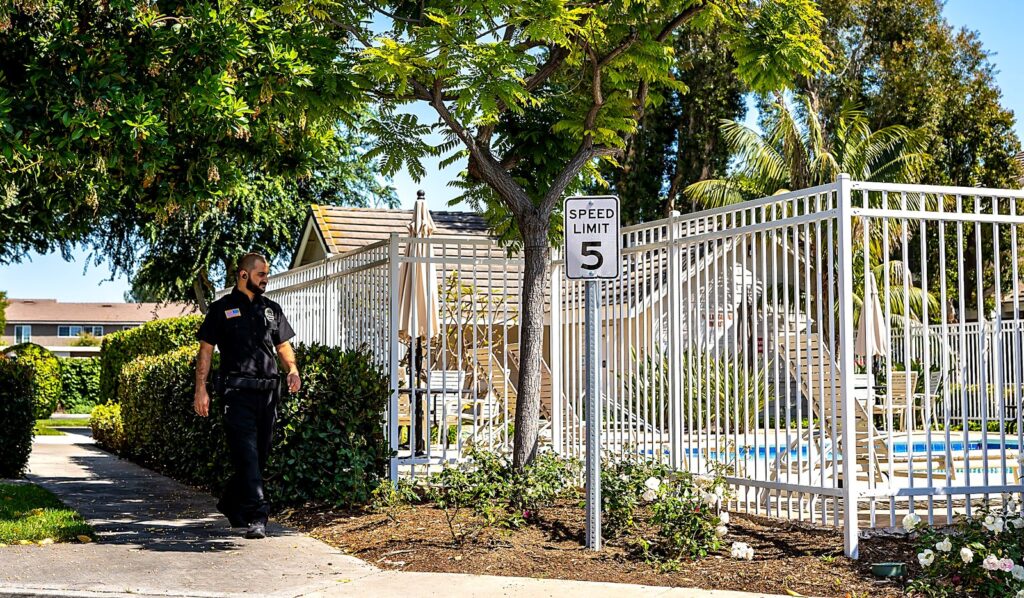
Pools, clubhouses and gyms draw non-residents late at night. Randomized patrols and CC&R enforcement without confrontation keep amenities for members.
Coverage options
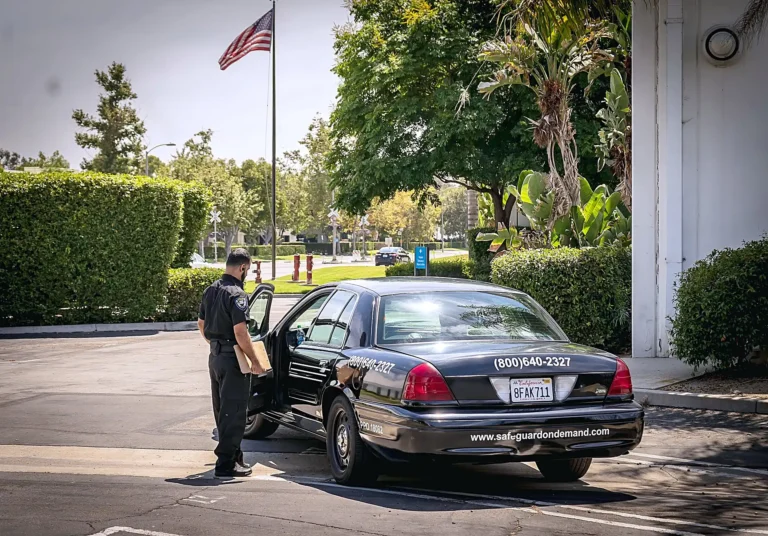
Visitor and vendor verification, resident recognition, package and delivery logs, 24/7 or peak hours.
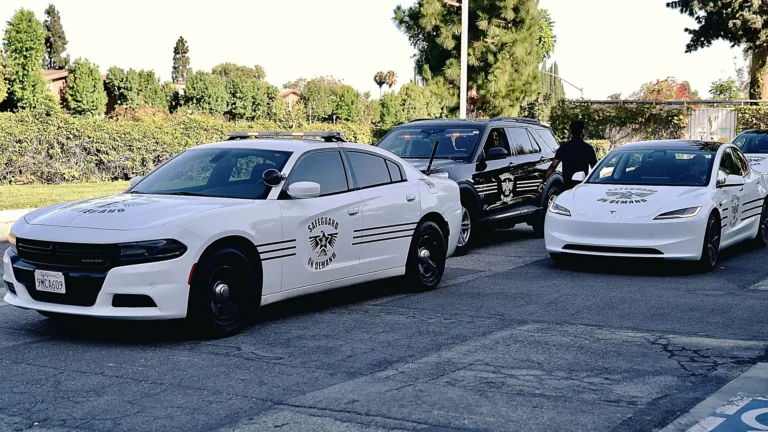
Scheduled visits several times a night, randomized routes, perimeter and amenity checks, lock-ups.
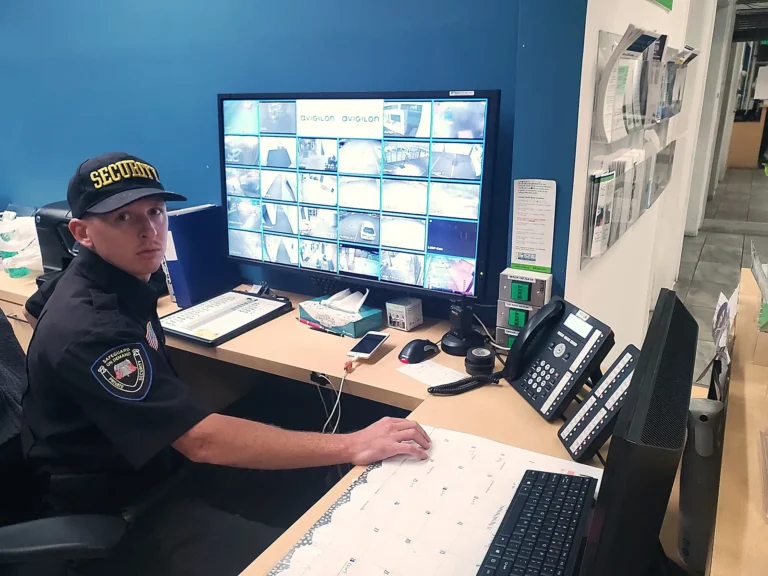
Camera alerts reviewed by a live operator who issues voice-downs and dispatches a patrol or police.
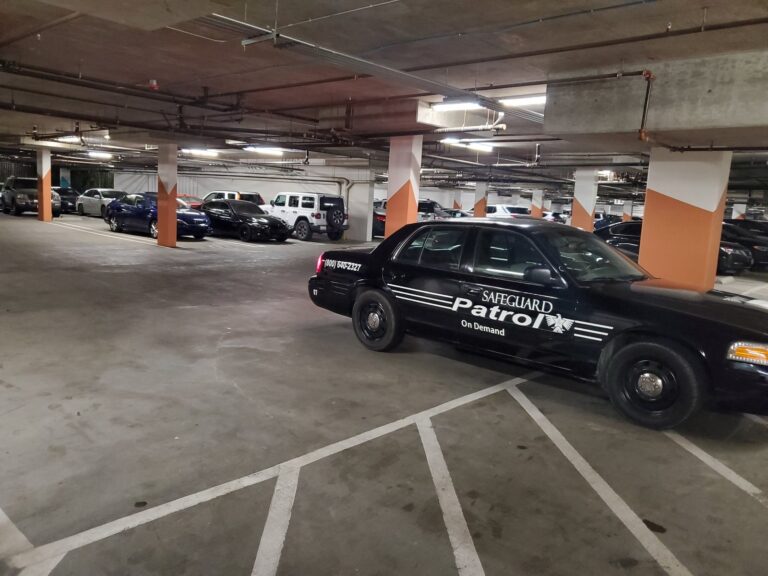
Residents register guest vehicles online; officers verify, warn and tow per your rules.
Our standards at a glance
The same standard on every post, whether it is one overnight patrol or a 24/7 gatehouse.
Gate procedures, CC&R rules and escalation paths, signed off before day one.
Every shift documented; a daily summary to your manager.
Unannounced field checks from the office nearest you.
Guard card, background check and refresher training before assignment.
For the board packet
Print this for your next meeting. Here is how we answer each one.
| Ask the vendor | Safeguard On Demand |
|---|---|
| Are you a licensed California PPO, and insured? | Yes — licensed, bonded and insured; certificates issued with every proposal. |
| How are patrol visits verified? | GPS check-ins and timestamped photos on every visit; the board can audit any night. |
| Who reviews camera alerts? | A live operator, 24/7 — not an automated email. |
| What is the contract term? | No long-term contract; scale coverage up or down with 30 days’ notice. |
| Will you attend board meetings? | Yes, on request, with an incident-trend summary. |
| How is pricing structured? | One fixed rate for the agreed scope; written proposal within one business day of the site walk. |
| Where is your nearest office? | Six California offices — Santa Ana HQ, Los Angeles (Northridge), San Diego, Inland Empire (Corona), Sacramento and Mountain View. |
Communities we protect
Statewide
Served from the office nearest your community, with officers across 13 counties.
How it works
Good community security is built around the property, not copied from a template. This is the same four-step process we use whether a board needs one overnight patrol or a staffed 24/7 gatehouse.
01
A supervisor walks the community with your manager or a board member: every gate, pedestrian door, amenity, guest lot and blind spot. We note where incidents have happened and how residents actually move through the property.
02
We turn the walk into written post orders: gate procedures, visitor and vendor rules, CC&R and parking enforcement, escalation contacts and what officers must never do. The board signs off before day one.
03
Officers are chosen for the post, not pulled from a pool. Each one completes an on-site orientation with a supervisor, learns the post orders and meets your manager before their first shift.
04
Every shift is documented with hourly reports and timestamped photos. Your manager gets a daily summary, and we review incident trends with the board so coverage can be adjusted as the community changes.
Choosing coverage
Most California associations do not need every service. The right mix depends on how many entrances the community has, whether the gate is staffed today, where incidents cluster, and what the budget can carry year after year. Here is how boards usually think it through.
A gatehouse officer is the strongest single deterrent for a gated community. Every vehicle is greeted, every visitor is verified against the resident list or a call to the resident, and contractors and delivery drivers are logged in and out. Officers also become a familiar face for residents, which matters for elderly members and families. Boards often staff the main gate around the clock and leave secondary gates on resident-only access.
Patrol is the right fit when a community has no gatehouse, has several entrances, or needs overnight coverage at a lower cost than a fixed post. A marked patrol vehicle visits several times a night at randomized times, checks perimeter walls, pools, clubhouses, guest lots and common areas, locks up amenities, and responds to resident calls through 24/7 dispatch. Every visit is GPS-logged with timestamped photos, so the board can see exactly when and where the officer was.
Remote video monitoring extends coverage to places an officer cannot watch all night: back gates, pool decks, mailbox banks and maintenance yards. When a camera detects someone after hours, a live operator reviews the video, issues a voice-down through a speaker, and dispatches a patrol unit or police if needed. Many communities pair cameras with patrol, so a person on screen gets an officer on site.
Guest-parking problems are one of the most common complaints HOA boards hear. Officers can enforce parking rules from your CC&Rs, issue warnings, and coordinate tows according to your approved policy, while residents register guests online so legitimate visitors are never cited.
For California boards
Security decisions in a California common-interest development touch governing documents, state law and the association’s insurance, so it pays to get the basics right before the first shift.
Any company providing security guards in California must be licensed by the Bureau of Security and Investigative Services (BSIS) as a private patrol operator, and every officer must hold an active BSIS guard card. Armed officers also need a BSIS firearms permit. Ask any vendor for its license number and verify it on the state’s public license search.
Officers observe, document and report; the board enforces. Under the Davis-Stirling Act, fines and other discipline follow the association’s own notice-and-hearing process, so the most useful thing a security company can give the board is clear, dated, photographed documentation of each violation.
Towing from a California community is governed by Vehicle Code section 22658, including posted signage requirements. Your post orders should spell out exactly who can authorize a tow and when, so enforcement stays lawful and consistent.
Request certificates of insurance with the proposal, and make sure incident reports are written so they can be shared with your insurer, your attorney or law enforcement if needed.
Budgeting
Every community is priced on its own scope after the site walk, with one fixed rate in a written proposal. These are the factors that move the number most.
A 24/7 gatehouse costs more than evening and weekend coverage or overnight patrol visits.
More gates, acres and amenities mean more posts or more patrol time.
The number of patrol visits per night sets most of a patrol-only program's cost.
Most HOAs use unarmed officers; armed coverage is priced separately.
Live monitoring can replace some on-site hours while widening coverage.
Summer pool season and holidays often need extra hours you can scale back later.
Scheduled visits run several times a night at randomized times. The number is set in your proposal and can change with 30 days’ notice.
Yes. Officers document violations, issue warnings and coordinate tows according to post orders your board approves.
Both armed and unarmed officers are available; most communities use unarmed gatehouse officers with a marked patrol backup.
A live operator reviews each alert, issues a voice-down through the camera speaker and dispatches a patrol unit or police when needed.
Site walk, written post orders, a fixed-rate proposal, then officer orientation on your property before the first shift. Typical start is within one to two weeks.
No long-term contract. Coverage continues month to month and can be adjusted as your budget or season changes.
Residents and your management company can reach our 24/7 dispatch line, which sends the nearest patrol unit to the community and logs the call in your daily report.
Yes. Bilingual English and Spanish officers are available, which helps with residents, staff and vendors in many California communities.
Residents register guests through an online safelist. Officers verify vehicles, issue warnings and coordinate tows only as your board-approved post orders and California towing rules allow.
Yes. Many boards start with overnight patrol or cameras, review incident reports for a few months, then add staffed hours where the data shows they are needed.