Theme Parks & Attractions
Entry screening, crowd managers, roving officers and parking patrols for theme parks, water parks and family attractions — keeping guests safe and the day moving.
Lines, capacity and flow.
Approachable officers.
Bags and prohibited items.
Lots and shuttles.
Quick answer
Theme parks and attractions need entry screening, crowd management, roving officers, lost-child and medical response support and parking patrols. The California Fire Code requires trained crowd managers at many assembly events (more than 500 indoors or 1,000 outdoors, at least two plus one per 250 people), and attraction employers must maintain SB 553 workplace violence plans. Safeguard On Demand provides family-friendly officers for attractions across California.
The challenge
Attractions combine thousands of guests with children, heat and long lines.
Holiday and summer peaks overwhelm entrances.
Fast, calm response procedures.
Disputes that become liability claims.
Coverage options
Combine services into one program.
Our standards
The same standard on every shift.
Duties and escalation contacts approved by you.
Timestamped photos and notes.
Unannounced visits.
Guard Card and background check.
Before you hire
Here is how we answer.
| Ask the vendor | Safeguard On Demand |
|---|---|
| Can you provide crowd managers? | Yes, to meet fire code requirements. |
| Can you scale for peak days? | Yes. |
| Do you handle bag checks? | Yes. |
| Can you patrol parking? | Yes. |
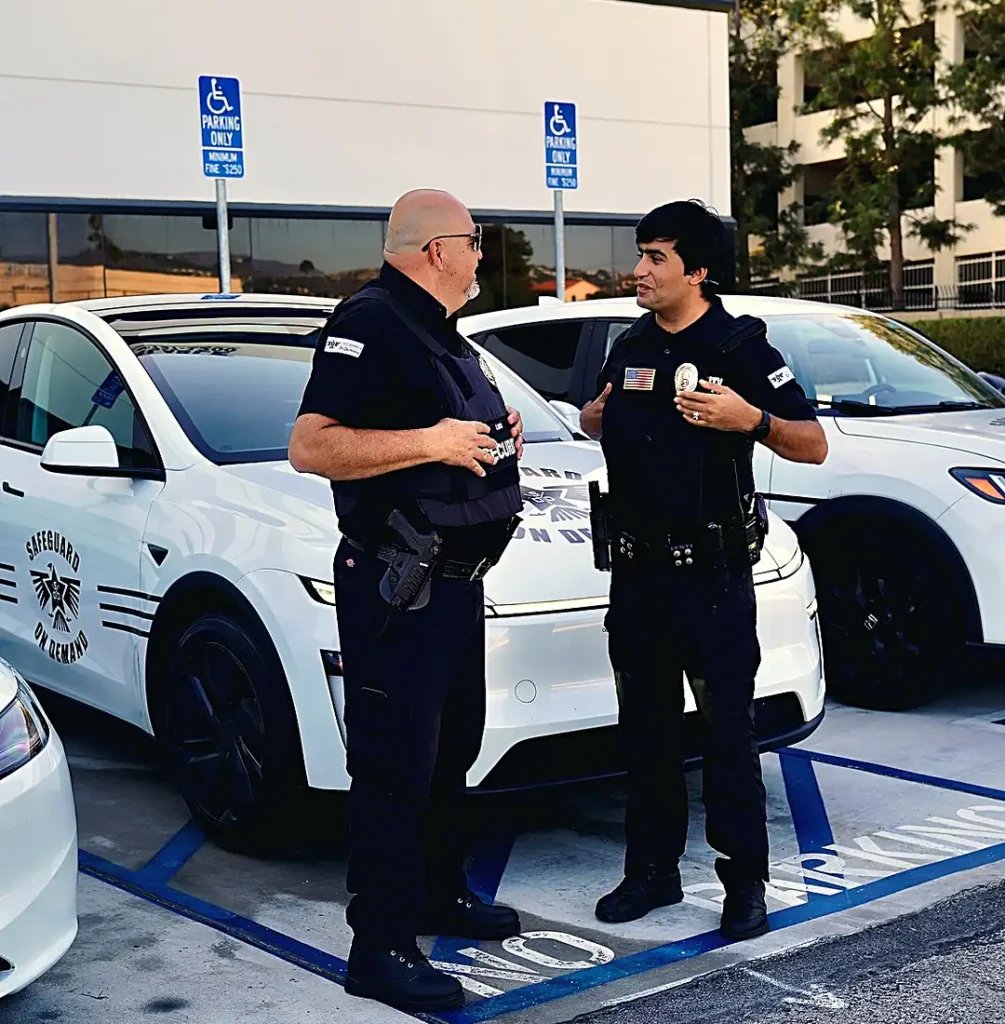
| Are officers family-friendly? | Yes — selected and trained for guest service. |
| Is there a long-term contract? | No long-term contract. |
Who we protect
Statewide
Served from the office nearest your site, with officers across 13 California counties.
How it works
A short, documented process.
01
Property, hours and incident history reviewed.
02
Duties and contacts written and approved.
03
Officers learn the site before day one.
04
Shift reports and regular check-ins.
Choosing coverage
Staffing depends on attendance, entrances and layout. Most attractions combine entry officers, roving patrols and parking patrols, with extra event staff on peak days.
California requirements
The California Fire Code (Section 403) requires trained crowd managers at many assembly events — when more than 500 people gather indoors or 1,000 outdoors — at a minimum of two plus one per 250 people; local fire officials may adjust requirements. Attraction employers must maintain a workplace violence prevention plan, incident log and annual training under SB 553 (Labor Code 6401.9).
Every officer must hold a BSIS Guard Card and work for a licensed private patrol operator — 8 hours of Power to Arrest and Appropriate Use of Force training before registration, 32 more hours within six months, and 8 hours of continuing training every year. Verify any company or officer on the state’s DCA License Search.
Budgeting
We do not publish one-size rates. These factors move the price.
24/7, nights only or business hours.
Armed posts cost more.
Patrols cost less than full-time posts.
Acreage, buildings and entrances.
Site history and neighborhood.
Short-term vs. ongoing.
Many do under the California Fire Code at large assemblies.
Across 13 California counties from offices in Santa Ana, Los Angeles (Northridge), San Diego, the Inland Empire, Sacramento and Silicon Valley.