Private Estates & Residences
Discreet gate officers, residential patrols, executive protection and privacy-aware monitoring for estates and high-profile residences — protection that respects your family’s privacy.
Low-profile, professional officers.
Family details protected.
Gates, grounds and staff.
Wildfire and emergency plans.
Quick answer
Estate security protects a family, its home and its privacy: gate and gatehouse officers, discreet residential patrols, executive protection when the family travels, and monitored cameras. In California, privacy law shapes how it is done: Penal Code §632 prohibits recording confidential conversations without consent, so audio recording in private areas is a legal risk, and Civil Code §1708.8 penalizes capturing images of private family activity by entering land or airspace — which matters for paparazzi and drones.
The challenge
High-value residences face risks most homes never do.
Unwanted photography and drones over the property.
Hillside and canyon homes are targeted during evacuations.
Officers and cameras must avoid unlawful audio recording.
Coverage options
Combine services into one program.
Our standards
The same standard on every shift.
Duties and escalation contacts approved by you.
Timestamped photos and notes.
Unannounced visits.
Guard Card and background check.
Before you hire
Here is how we answer.
| Ask the vendor | Safeguard On Demand |
|---|---|
| Are your officers discreet? | Yes — selected for residential work and professional conduct. |
| Can officers work in plain clothes? | Yes, for unarmed posts. |
| Do you provide executive protection? | Yes. |
| Can you protect the home during evacuations? | Yes, coordinated with authorities. |
| How do you handle privacy? | Confidential post orders and privacy-aware camera practices. |
| Is there a long-term contract? | No long-term contract. |
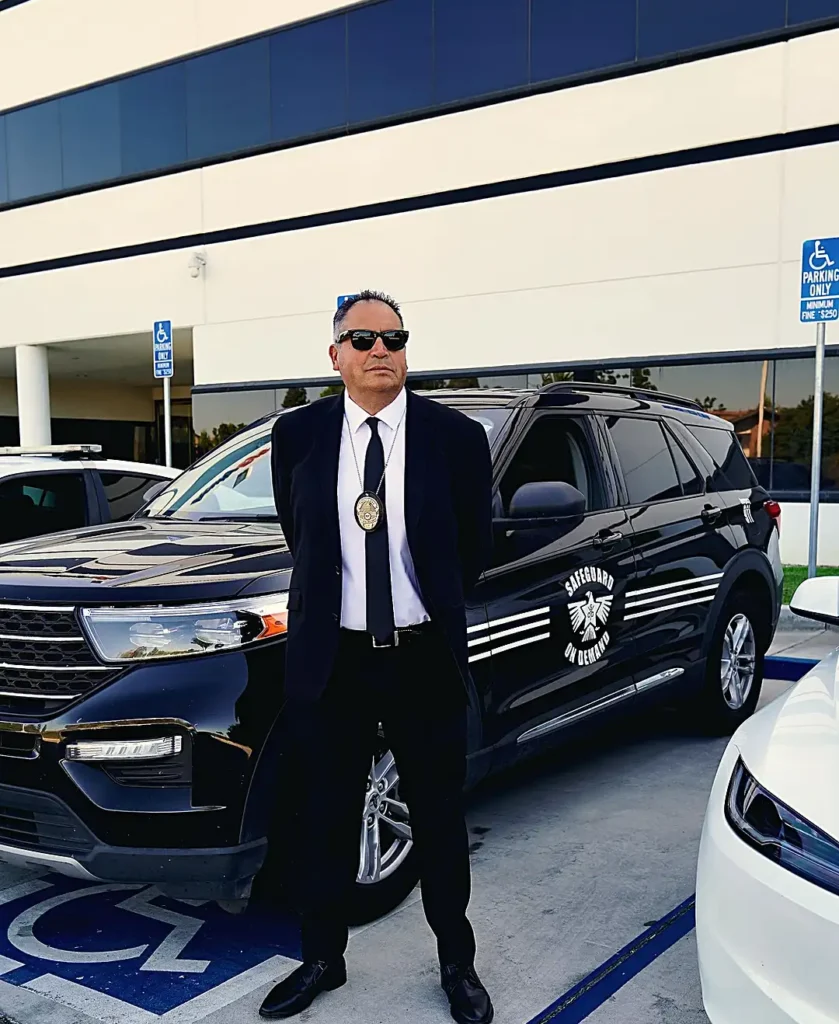
Who we protect
Statewide
Served from the office nearest your site, with officers across 13 California counties.
How it works
A short, documented process.
01
Property, hours and incident history reviewed.
02
Duties and contacts written and approved.
03
Officers learn the site before day one.
04
Shift reports and regular check-ins.
Choosing coverage
Many estates use a gatehouse officer plus patrols. Families with public profiles add executive protection; vacation homes rely on monitoring and patrol checks. See private security services.
California requirements
Penal Code §632 prohibits recording confidential conversations without the consent of all parties, with fines up to $2,500 for a first offense — video is fine, but audio recording in private areas is a legal risk. Civil Code §1708.8 makes it a physical invasion of privacy to enter someone’s land or the airspace above it to capture images or recordings of private or family activity, with treble damages and civil fines.
Every officer must hold a BSIS Guard Card and work for a licensed private patrol operator — 8 hours of Power to Arrest and Appropriate Use of Force training before registration, 32 more hours within six months, and 8 hours of continuing training every year. Verify any company or officer on the state’s DCA License Search.
Budgeting
We do not publish one-size rates. These factors move the price.
24/7, nights only or business hours.
Armed posts cost more.
Patrols cost less than full-time posts.
Acreage, buildings and entrances.
Site history and neighborhood.
Short-term vs. ongoing.
Yes — gate officers, patrols and executive protection.
Audio recording of confidential conversations without consent is restricted by Penal Code §632.
Yes, coordinated with authorities.
Across 13 California counties from offices in Santa Ana, Los Angeles (Northridge), San Diego, the Inland Empire, Sacramento and Silicon Valley.