Restaurants, Bars & Nightlife
Licensed door staff, physical ID checks, crowd control at closing and incident reports that protect your ABC license — for restaurants, bars, nightclubs and lounges.
Not just a scanner.
Minors and over-service.
Lines, crowds and exits.
Facts for ABC and insurers.
Quick answer
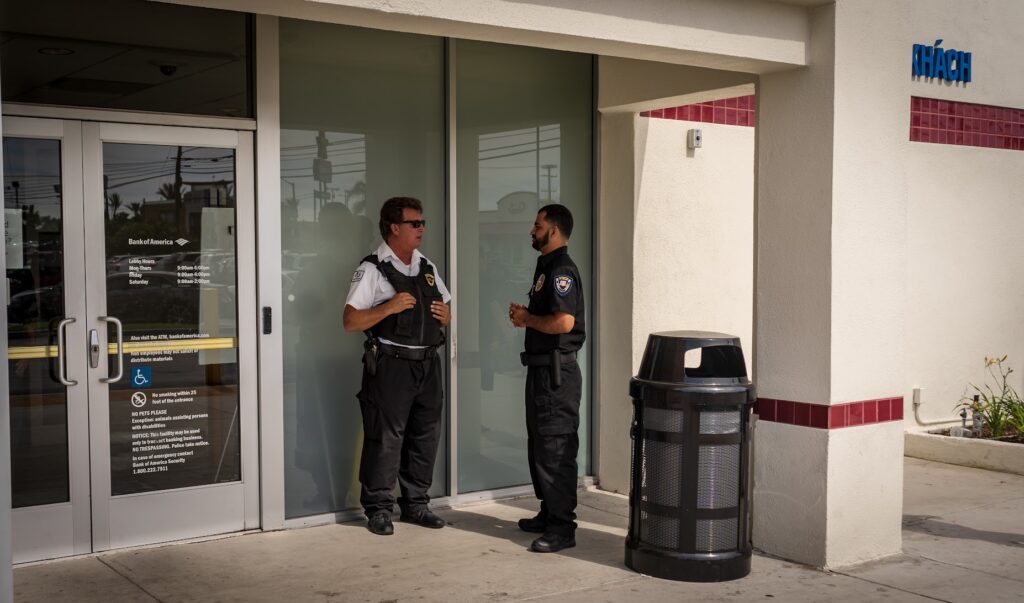
For alcohol licensees, security protects the ABC license as much as the guests. Selling to a minor (B&P §25658), serving an obviously intoxicated person (§25602) and running a disorderly house (§25601) can all lead to discipline. Licensees who demand, inspect and rely on bona fide ID have a defense to minor-sale charges (§25660) — which is why door staff should physically inspect IDs, not just scan them. Security staff supplied by a security company must be registered guards.
The challenge
One bad night can bring ABC discipline, neighbor complaints and lawsuits.
A single sale to a minor puts the license at risk.
Noise and crowds at closing and CUP conditions.
Incidents that become liability claims.
Coverage options
Combine services into one program.
Our standards
The same standard on every shift.
Duties and escalation contacts approved by you.
Timestamped photos and notes.
Unannounced visits.
Guard Card and background check.
Before you hire
Here is how we answer.
| Ask the vendor | Safeguard On Demand |
|---|---|
| Are your door staff registered guards? | Yes — every officer holds a BSIS Guard Card. |
| Do you physically check IDs? | Yes — inspect and match, not just scan. |
| Can you handle closing time? | Yes — lines, exits and neighborhood calm. |
| Will you document ejections? | Yes. |
| Can you meet CUP security conditions? | Yes — we staff to your permit conditions. |
| Is there a long-term contract? | No long-term contract. |
Who we protect
Statewide
Served from the office nearest your site, with officers across 13 California counties.
How it works
A short, documented process.
01
Property, hours and incident history reviewed.
02
Duties and contacts written and approved.
03
Officers learn the site before day one.
04
Shift reports and regular check-ins.
Choosing coverage
Most bars need an ID-check officer at the door during peak hours, plus roving staff inside on busy nights and an officer outside at closing. Check your conditional use permit — many cities set security staffing conditions. See event security.
California requirements
Selling or furnishing alcohol to an obviously intoxicated person is a misdemeanor (Business & Professions Code §25602). Licensees who demand, inspect and rely on bona fide identification have a defense to minor-sale charges (§25660); an ID scanner helps only if the ID is also physically inspected. Keeping a disorderly house is a misdemeanor (§25601). Security staff hired through a security company must be registered guards; in-house staff generally must register as proprietary private security officers only when security is their primary duty and they wear a security uniform.
Every officer must hold a BSIS Guard Card and work for a licensed private patrol operator — 8 hours of Power to Arrest and Appropriate Use of Force training before registration, 32 more hours within six months, and 8 hours of continuing training every year. Verify any company or officer on the state’s DCA License Search.
Budgeting
We do not publish one-size rates. These factors move the price.
24/7, nights only or business hours.
Armed posts cost more.
Patrols cost less than full-time posts.
Acreage, buildings and entrances.
Site history and neighborhood.
Short-term vs. ongoing.
Door staff supplied by a security company must be registered guards; in-house staff generally register only when security is their primary uniformed duty.
Physically inspecting the ID matters for the §25660 defense.
Yes — we staff to your permit conditions.
Across 13 California counties from offices in Santa Ana, Los Angeles (Northridge), San Diego, the Inland Empire, Sacramento and Silicon Valley.