
Apartment HOA security Los Angeles: the short version
Apartment HOA security Los Angeles is a question we help California property owners and managers answer every week. The guide below covers what it involves, when it makes sense and how to get it right, with input from our licensed security guard services team. Dispatch is live 24/7 at (800) 640-2327.
Quick answer: a well-run apartment or HOA security program in Los Angeles has five non-negotiables — written post orders, hourly photo reports, a named field supervisor, courtesy patrol with real logs, and insurance certificates before the first shift. Here’s the checklist we hand property managers, from our LA branch at 19849 Nordhoff St, Ste 104, Northridge.
HOA boards deciding between nightly patrol and a posted officer should also read our guide to HOA security patrol vs. onsite guards in California.
Why multifamily security fails in LA
Most complaints we inherit from other vendors sound the same: the guard was asleep or absent, the board got no reports, and nobody answered the phone after midnight. None of that is a people problem — it’s a systems problem. A courtesy patrol without timestamped proof is a rumor. We protect dozens of residential communities across LA County, and every fix started with the same checklist below.
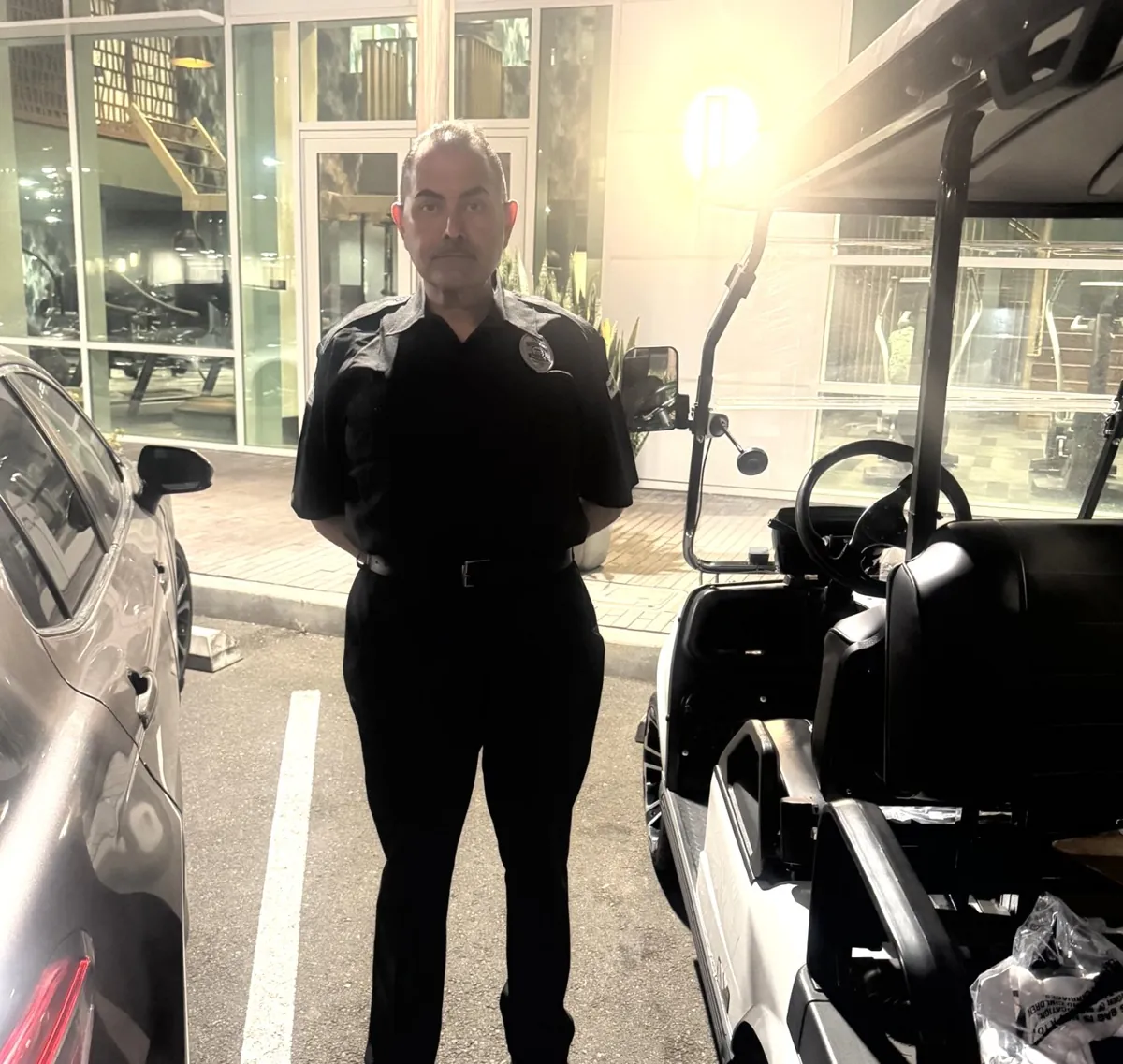
The property manager’s checklist
1. Written post orders the board approves
Patrol routes, gate procedures, towing and noise escalation, package room checks, pool hours enforcement — in writing, signed off, and updated when the community changes. If a vendor can’t produce a sample, stop the interview.
2. Hourly reports with timestamped photos
Every tour documented from the officer’s phone: time, location, photo. Managers forward them to boards instead of writing their own summaries. Ask any bidder to show you last night’s report from a comparable property.
3. A named supervisor who shows up unannounced
Officers perform like their supervision. Our San Fernando Valley communities see supervisors nightly out of Northridge; Gateway Cities and South Bay posts sit on dedicated routes. Ask: who supervises, and when did they last surprise-visit a post?
4. Courtesy vehicle patrol that’s actually random
Fixed-time patrols train trespassers. Randomized multi-visit patrols with marked vehicles — logged by GPS and photos — change behavior at a fraction of standing-post cost. See mobile vehicle patrol.
5. Insurance before the first shift
General liability and workers’ comp certificates, naming the association, delivered before day one.
Parking: the fight you can win
Guest-spot abuse is the #1 board complaint we hear. Pair patrol with parking enforcement — permits, safelists and consistent tagging — and the problem drops within two cycles.
What it costs in LA
Drivers: hours of coverage (overnight-only vs 24/7), standing officer vs patrol visits, armed vs unarmed, number of gates and amenity areas, and whether parking enforcement is bundled. We quote fixed hourly rates after a free walk-through — no long-term contract.
Where we run multifamily posts
Across LA County from the Valley to the coast: Los Angeles, Long Beach, Pasadena, Glendale, Burbank, Torrance, Van Nuys, Sherman Oaks, Woodland Hills, Lakewood and the rest of the county — full map at the Los Angeles County hub.

Apartment HOA security Los Angeles boards should budget for: the four tiers
Most boards start by asking “guard or patrol?” The better question is which tier fits the community’s size, gate hardware and incident history. Apartment HOA security Los Angeles associations buy tends to fall into four tiers, and moving between them is how a board matches spending to what is actually happening on the property.
| Tier | Best fit | What residents see | What the board receives |
|---|---|---|---|
| 1. Courtesy patrol only | Under ~200 units with working gates and few incidents | Marked vehicle passes at irregular hours | GPS- and photo-logged visit reports nightly |
| 2. Patrol plus parking enforcement | Communities where parking is the top complaint | Permit checks, warnings, tows done by the rules | Parking logs, tow records, complaint trend |
| 3. Evening standing post plus patrol | Larger communities, active amenity areas, recurring after-hours incidents | An officer on site in the evening window, patrol overnight | Hourly photo reports, incident reports same night |
| 4. 24/7 gate post | Gated high-density communities with steady visitor traffic | A courteous officer who knows residents and expected vendors | Visitor and vendor logs, gate incident reports |
Apartment HOA security Los Angeles, step by step: from board vote to first shift
1. Scope the problem before the vendor
Pull twelve months of incident emails, police calls and parking complaints. Boards are usually surprised: the loud problem is parking or package theft, not the break-in that triggered the meeting. The scope should name the three things the program has to fix.
2. Align with the rules the community already has
Post orders have to match the CC&Rs, the parking rules and the amenity hours already on file, because officers observe and document against those rules; they do not invent new ones. Towing follows California’s private-property signage and authorization requirements, and a trespass authorization or letter of agency on file with the local police department gives responding officers something to act on.
3. Post orders the board approves
Patrol routes, gate and visitor procedure, parking and towing steps, noise and amenity escalation, package-room checks, who gets called at 2 a.m. and in what order. Signed by the board, updated when the community changes.
4. Insurance, licensing and the resident notice
General liability and workers’ compensation certificates naming the association before day one, a licensed private patrol operator verifiable on the BSIS lookup, and a short notice to residents explaining what changes and who to call.
5. The 30-day report to the board
Visit logs, incident reports and parking trend reviewed at the next meeting; hours and tier adjusted in writing. Apartment HOA security Los Angeles boards keep is the kind that shows up in the minutes with numbers.
What officers can and cannot do on a residential property
Private security officers in California observe, document, deter and report. They can ask a trespasser to leave, call police, enforce parking rules the association has adopted, and document rule violations for management to act on. They do not issue citations, make arrests beyond what any private person may, enter units, or settle disputes between residents. A post order that asks for more than that is setting the officer and the association up for a complaint. Our officers are trained on exactly where the line is, and the reports they write are built to support management’s next step, whether that is a warning letter, a tow or a police report.
Mistakes that make boards fire their security vendor
- Buying a 24/7 post for a parking problem. Tier 2 solves it for a fraction of the cost.
- No reports. If the board cannot see last night, it assumes nothing happened — or that the officer was asleep.
- Fixed patrol times. Trespassers learn the schedule in a week.
- Towing without the paperwork. One improper tow costs more than a season of parking complaints.
- Post orders nobody updated. New gate hardware, new amenity hours and new rules all change what the officer should do.
- No supervisor visits. Officers perform like their supervision; ask when the last unannounced visit was.
Los Angeles County notes
Apartment HOA security Los Angeles communities need differs by part of the county. San Fernando Valley communities in Van Nuys, Sherman Oaks and Woodland Hills see supervisors nightly out of our Northridge branch and lean on courtesy patrol with parking enforcement; Glendale, Burbank and Pasadena mid-rise communities tend toward evening posts; the Gateway Cities and South Bay — Long Beach, Lakewood, Torrance — run on dedicated patrol routes; and gated high-density communities across Los Angeles proper are where 24/7 gate posts make sense.
The Los Angeles County hub lists every city we serve, and every officer carries a current BSIS guard card, which you can verify on the Bureau of Security and Investigative Services site.
Board packet checklist
- ☐ Twelve months of incidents, police calls and parking complaints summarized
- ☐ Three problems the program must fix, in writing
- ☐ Tier selected and the reason recorded in the minutes
- ☐ Post orders aligned with CC&Rs, parking rules and amenity hours
- ☐ Towing procedure that follows California signage and authorization rules
- ☐ Trespass authorization on file with local police
- ☐ Insurance certificates naming the association received before day one
- ☐ PPO license verified on the BSIS lookup
- ☐ Resident notice sent
- ☐ 30-day report scheduled for the next board meeting

Apartment HOA security Los Angeles: frequently asked questions
Standing guard or courtesy patrol for an HOA?
Under ~200 units with gate hardware, randomized patrol usually wins on value; larger communities or active incidents justify a standing post. We’ll model both in the assessment.
Can officers enforce house rules?
They observe, document and enforce community rules per post orders — noise, pool, parking — and escalate to LAPD/LASD when it’s criminal. What a guard can legally do is covered in our California licensing guide .
How fast can coverage start?
Most LA multifamily posts start same day to 48 hours from our Northridge branch.
Can security officers tow cars at our community?
Officers can enforce the parking rules the association has adopted and coordinate tows that follow California’s private-property signage and authorization requirements. The tow itself is done by a licensed tow operator under the association’s authorization; the officer documents the violation and the call.
How many patrol visits a night does an apartment community need?
Two to four randomized visits is the usual starting point for a community under 200 units; the first month’s reports then show whether to add visits, an evening post or parking enforcement.
Who do residents call after midnight?
Our dispatch line, which is live 24/7 and routes to the patrol officer or supervisor covering the community. The number and the escalation order are in the resident notice and the post orders.
Get the checklist working for your community
Call (800) 640-2327 or book a free property walk-through via the LA County hub.
If you are weighing apartment HOA security Los Angeles for a property in California, Safeguard On Demand can walk the site with you and put a written plan in place. Call (800) 640-2327 any time, day or night, or request a free quote online.