
Vacant commercial property security: the short version
Vacant commercial property security is a question we help California property owners and managers answer every week. The guide below covers what it involves, when it makes sense and how to get it right, with input from our licensed security guard services team — every officer we assign holds a current guard card you can verify with the California Bureau of Security and Investigative Services. Dispatch is live 24/7 at (800) 640-2327.
Quick answer: a vacant commercial property in the East Bay is a liability clock — squatters, copper strippers, dumping and insurance exclusions all start running the day the tenant leaves. This is the checklist we hand owners and receivers from Richmond to Antioch, with coverage dispatched through our Bay Area operation in Mountain View.
Why vacant is different
An occupied building defends itself with people. A vacant one advertises: dark windows, full gutters of copper, an unwatched lot. Many property policies restrict or exclude coverage after 30–60 days of vacancy unless protective safeguards are in place — which makes documented security not just protection but policy compliance. Confirm your policy’s vacancy clause with your broker, in writing.
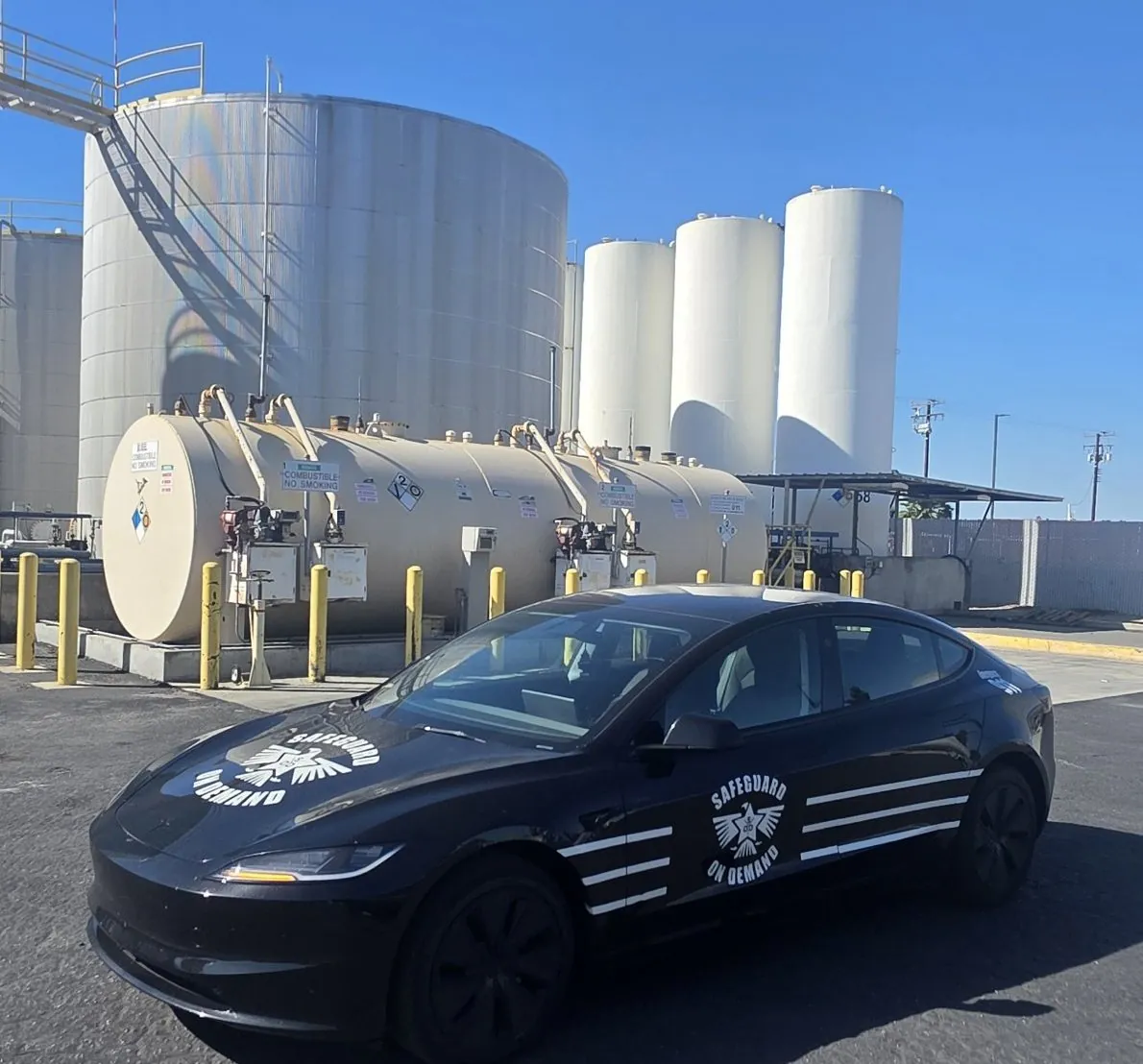
The vacant property checklist
- Day 1 — document the baseline: photo survey inside and out; meters, panels, risers, roof units inventoried
- Harden the obvious: locks re-keyed, ground-floor glass boarded or filmed where appropriate, gates chained with logged keys
- Kill the free utilities: water off (freeze/flood risk), power down to what cameras and lighting need
- Light the exterior: dark buildings invite; lit perimeters deter and make patrol photos useful
- Put eyes on it: randomized marked-vehicle patrol with interior walkthroughs — GPS- and photo-logged — or a monitored camera unit for 24/7 coverage between visits
- Post it and mean it: no-trespass signage posted per local code, trespass letters on file with the police department where the city offers it
- Log everything: every patrol visit, every finding, every board-up — the file your insurer and your closing attorney will both ask for
Squatters: the 48-hour rule
Occupation hardens fast — the longer someone’s belongings sit inside, the messier removal becomes. Patrol frequency in the first weeks of vacancy is what keeps the building yours; our officers document, notify and coordinate with local PD per post orders, and board-up follows the same visit.
Construction and receivership flanks
Buildings between tenants often become buildings under renovation — construction site security and fire watch (sprinklers often impaired during TI work) continue the same file.
Where we cover
Concord, Walnut Creek, Richmond, Antioch and the 680/4 corridors — county map at the Contra Costa County hub.

What the vacancy clause actually says
Most commercial property policies written on standard forms treat a building as vacant once it has been empty for 60 consecutive days, and from that point they change the deal. Some losses are excluded outright and others are paid at a reduced amount unless the owner can show protective safeguards were in place. The wording varies by carrier, so the first call after a tenant leaves should be to your broker, in writing — and the second should be about vacant commercial property security that produces a paper trail the adjuster will accept.
| Loss type | Typical treatment after 60 days vacant | What documented security changes |
|---|---|---|
| Vandalism and graffiti | Often excluded | Patrol photos date the damage and show the building was watched |
| Theft and attempted theft | Often excluded | Gate logs, incident reports and police report numbers support the claim |
| Sprinkler leakage and water damage | Often excluded or reduced | Interior walkthroughs catch leaks and freeze risk before they become losses |
| Glass breakage | Often excluded | Board-up on the same visit keeps one broken pane from becoming an open door |
| Fire | Usually covered, sometimes reduced | Fire watch where sprinklers are impaired; patrol checks on illegal cooking or heating |
Vacant commercial property security, step by step: the first 14 days
Day 1: baseline and hardening
Photo survey inside and out, meters and panels inventoried, locks re-keyed, keys logged. Water off unless fire sprinklers depend on it; power down to what lighting and cameras need. This is the day the file starts.
Days 2–3: eyes on the building
A monitored solar camera unit goes on the lot and the first randomized patrol route starts the same night: exterior pass, door and window check, interior walkthrough on a set cadence, every visit GPS- and photo-logged.
Week 1: signage and the police file
No-trespass signage posted to local code, a trespass letter of agency filed with the police department where the city offers it, and emergency contacts posted at the main entrance so a patrol officer or a neighbor can reach someone at 2 a.m.
Week 2: tighten what the first week showed
Patrol frequency is adjusted to the activity the reports show — more visits where people are testing the doors, fewer where nothing moves. Board-ups, lighting fixes and fence repairs are scheduled off the same reports.
Ongoing: the weekly packet
Owners, receivers and brokers get a weekly packet: visit log, photos, findings, any incident and police report numbers. That packet is what the insurer, the lender and eventually the buyer’s attorney will ask for.
What drives the cost of vacant commercial property security
Visit frequency is the main lever — two randomized passes a night is a different budget from six. Building size and whether interior walkthroughs are included set the time per visit. A monitored camera unit is usually the cheapest way to add 24/7 coverage between visits, and a standing officer is reserved for buildings with active intrusion or high-value fixtures still inside.
Portfolio pricing applies when a receiver or broker has several vacant buildings on the same route. See our guide to what drives security guard cost in California for the general picture.
Mistakes that turn a vacancy into a loss
- Waiting for the first break-in. The cheapest week of vacant commercial property security is the first one, before the building is known to be empty.
- Leaving the utilities on. Free water and power attract occupation and create the leaks and fires the policy no longer pays for.
- Cameras without response. Recorded footage of copper leaving the building is not a safeguard.
- No signage, no letter. Without posted notice and a trespass letter, responding officers have less to act on.
- Boarding up days later. One broken pane becomes an open door overnight. Board-up belongs on the same visit.
- No file. If visits, findings and incidents are not documented, the claim, the sale and the receivership all get harder.
Contra Costa County notes
Vacant commercial property security in Contra Costa follows the two freeway corridors. Along 680, Walnut Creek and Concord carry office and retail vacancies where the exposure is glass, copper and squatting in finished space. Along Highway 4, Richmond, Pittsburg and Antioch add industrial and warehouse vacancies where the losses are wire, HVAC units and dumping on the lot. Coverage is dispatched 24/7 through our Bay Area operation, and the Contra Costa County hub lists every city we serve. Officers assigned to vacant buildings carry a current BSIS guard card, which you can verify on the Bureau of Security and Investigative Services site.
Hand-off checklist for brokers and receivers
- ☐ Vacancy date recorded and broker notified in writing
- ☐ Day-1 photo survey and utility inventory in the file
- ☐ Keys re-keyed and logged; gates chained
- ☐ Water off (or sprinkler-only), power reduced to lighting and cameras
- ☐ Monitored camera unit live on the lot
- ☐ Randomized patrol route with interior walkthroughs started
- ☐ No-trespass signage posted; trespass letter filed with police
- ☐ Emergency contact posted at the main entrance
- ☐ Weekly packet going to owner, receiver and lender
- ☐ Fire watch arranged whenever sprinklers are impaired

Vacant commercial property security: frequently asked questions
Patrol or cameras for a vacant building?
Under most budgets: a monitored solar camera unit plus two to four randomized patrol visits nightly. Pure cameras without response is footage of your losses.
What does it cost?
Patrol routes price per visit; standing posts hourly. Fixed quote after a free walk-through — receivers and brokers get portfolio pricing.
How fast can coverage start?
Same day in most of the county — call (800) 640-2327 .
Does vacant commercial property security keep my insurance in force?
No security provider can promise that; the policy language controls. What documented coverage does is give you the protective safeguards and the dated evidence most carriers look for when they decide how a vacancy loss is handled. Confirm your policy’s requirements with your broker in writing.
How often should a vacant building be patrolled?
In the first weeks, two to four randomized visits a night plus a monitored camera unit is the usual starting point. Frequency is then adjusted to what the reports show — more where doors are being tested, less where nothing moves.
Who handles squatters, security or police?
Officers observe, document, notify the owner and coordinate with police under the post orders; removal follows the lawful process for your situation. Frequent visits in the first weeks of vacancy are what keep occupation from starting in the first place.
Start the file today
Free vacancy assessment via the Contra Costa hub or (800) 640-2327, any hour.
If you are weighing vacant commercial property security for a property in California, Safeguard On Demand can walk the site with you and put a written plan in place. Call (800) 640-2327 any time, day or night, or request a free quote online.