
Warehouse security Oakland: the short version
Warehouse security Oakland is a question we help California property owners and managers answer every week. The guide below covers what it involves, when it makes sense and how to get it right, with input from our licensed security guard services team. Dispatch is live 24/7 at (800) 640-2327.
Quick answer: within a few miles of the Port of Oakland, the theft economics are simple — containers and trailers sit loaded, drayage yards run thin overnight crews, and the 880 corridor is the getaway route. The counter is gate logs, seal audits, randomized yard patrols and monitored cameras, run by officers who know what a drayage yard looks like at 3 a.m. We staff it across the East Bay through our Bay Area operation.
The port-adjacent risk profile
Cargo at rest is cargo at risk. Yards from West Oakland down through San Leandro and Hayward hold loaded containers waiting on appointments, bobtails and chassis worth six figures, and fuel in every tank. Add catalytic-converter crews working parked tractors and you get the East Bay’s distinctive loss pattern: not break-ins — drive-offs and strip jobs.
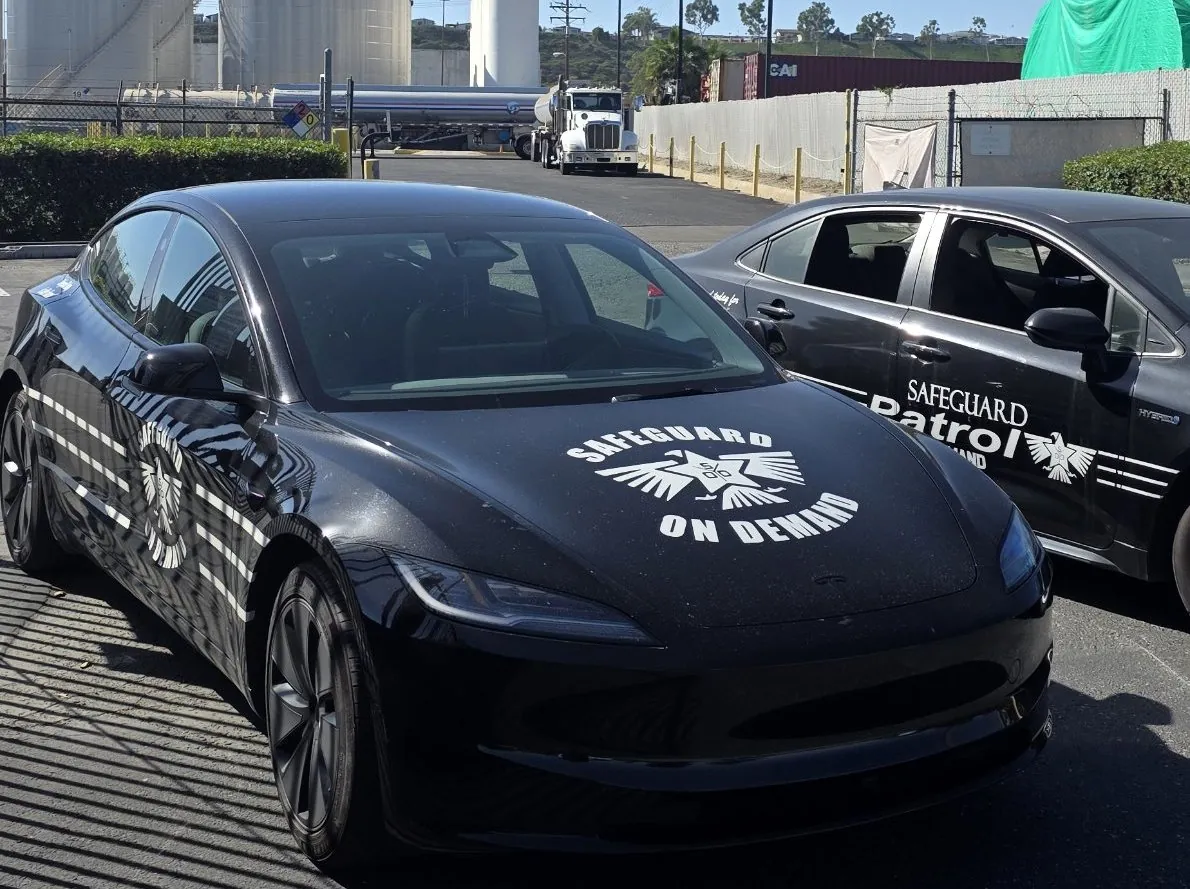
The yard playbook
Gate control with driver verification
Every tractor in and out logged against the appointment list — driver ID, unit numbers, seal photos. The majority of cargo theft is paperwork fraud at the gate, not bolt cutters at the fence. See warehouse & logistics security.
Seal and chassis audits
Twice-a-shift counts reconciled against your yard system; seals photographed; chassis and empties logged so a missing unit is a same-shift alarm, not a Friday surprise.
Randomized perimeter rounds
Hourly photo-logged patrols on patterns a scout can’t time — fence lines, dark corners, parked tractors (converter crews work fast and low). Officers trained on what belongs in a drayage yard and what doesn’t.
The camera layer
Live-monitored solar towers on back fences and rail-side gaps, with talk-down audio — the force multiplier for big yards that can’t justify two officers.
Armed where cargo value demands
Electronics and pharma loads staging overnight justify armed posts after a risk assessment.
Beyond the yards
The same East Bay roster covers industrial corridors in Fremont and Union City, multifamily in Oakland and Berkeley, and Tri-Valley office parks in Pleasanton and Livermore — map at the Alameda County hub.

Why warehouse security Oakland starts at the gate, not the fence
Most cargo that leaves an East Bay yard without permission leaves through the gate with paperwork. A driver arrives with a plausible appointment, a carrier name that checks out on a quick glance and a trailer number nobody matches to the list, and a six-figure load is on the 880 before the shift lead looks up. Warehouse security Oakland yards can trust is built around verification first: identity, carrier authority, appointment, unit numbers and seals, every time, with a photo of each.
| Threat | How it happens | The control |
|---|---|---|
| Fictitious pickup | Fraudulent carrier or double-brokered load presents at the gate | Driver ID, carrier authority and appointment matched; call-back to the broker on anything that does not line up |
| Yard drive-off | Tractor hooks a loaded trailer at night and leaves through an unstaffed gate | Staffed or camera-monitored gate after hours; king-pin locks on staged loads; gate log reconciled each shift |
| Converter and fuel strips | Crews work parked tractors and reefers along the fence line | Randomized perimeter rounds, lighting on the tractor rows, monitored cameras with voice-down |
| Street staging | Containers and chassis parked on public streets outside the yard | Bring staged units inside the fence or add a patrol pass to the street frontage |
| Internal leakage | Short counts, doctored seals, “lost” pallets | Seal audits twice a shift, dock-door photo logs, access control on the warehouse side |
Warehouse security Oakland, step by step: the first 30 days
Days 1–3: yard walk and loss review
We walk the yard, the dock face and the street frontage with the operations manager, then review the last twelve months of shortages, claims and police reports. The output is a yard map with gate points, dark corners, staging rows and the spots where units have gone missing before.
Week 1: gate protocol
Written gate orders: what the officer checks on every inbound and outbound move, what gets photographed, how appointments are matched, and the exact escalation when something does not match. Officers work from your appointment list or yard system, not from memory.
Week 2: patrol pattern and seal audits
Randomized hourly rounds on the fence line, tractor rows and reefer plugs, photo-logged with GPS, plus seal and chassis counts twice a shift reconciled against the yard system. A missing unit becomes a same-shift alarm.
Week 2–3: cameras with a response
Existing cameras are tied into live monitoring so an operator can challenge a crew over the yard speaker and dispatch the officer; where coverage is thin, a solar surveillance trailer covers the back fence without trenching.
Week 4: the 30-day review
Gate logs, audit counts and incident reports are reviewed with operations. Hours move to where the losses actually were, and the post orders are updated in writing.
What drives the cost of warehouse security Oakland yards pay
A staffed gate 24/7 is the largest line; many yards run a staffed gate on day shift and a camera-monitored gate with patrol response overnight. Yard acreage and the number of gates set patrol time. Armed coverage, where high-value loads justify it, costs more than unarmed. Shipper or insurer security protocols add audit and documentation time.
The lever that lowers cost most along the 880 corridor is a shared route: one marked unit covering several adjoining yards in a randomized loop, each yard receiving its own reports. For the general picture, see our guide to what drives security guard cost in California.
Mistakes that keep East Bay yards on the loss list
- Trusting the gate to the receiving clerk. Verification at the gate is a full-time job at a busy yard; clerks have a different full-time job.
- Fixed patrol times. Crews scout for a week. If the round is always at the top of the hour, the strip happens at twenty past.
- Cameras that only record. Footage of a drive-off is not a deterrent. A voice-down and a dispatched officer are.
- Staging loaded units on the street. The public frontage outside the fence is the least defended real estate you have.
- No seal discipline. If seals are not photographed in and out, a short count has no evidence behind it.
- Thin incident reports. Cargo claims and police follow-up live or die on unit numbers, seal numbers, times and photos.
Alameda County and the 880 corridor: local notes
Warehouse security Oakland yards need is shaped by distance from the port and the freeway. Drayage yards and transload warehouses within a few miles of the terminals carry loaded containers waiting on appointments; San Leandro and Hayward hold the dense industrial belt where parked tractors draw converter crews; Union City and Fremont add manufacturing and cold storage with night shifts and few people on site. The Alameda County hub lists every city we serve, and our warehouse security page covers the service line in detail. Every officer assigned here holds a current BSIS guard card, which you can verify on the Bureau of Security and Investigative Services site.
Warehouse security Oakland yard checklist
- ☐ Yard walk and twelve-month loss review completed
- ☐ Written gate protocol: ID, carrier, appointment, unit numbers, seals, photos
- ☐ Call-back rule for any mismatch before a load leaves
- ☐ Staffed or camera-monitored gate after hours
- ☐ Randomized perimeter rounds, GPS- and photo-logged
- ☐ Seal and chassis audits twice a shift
- ☐ King-pin locks on loads staged overnight
- ☐ No loaded units staged on the public street
- ☐ Cameras tied to live monitoring with voice-down
- ☐ 30-day review with operations
Warehouse security Oakland: frequently asked questions
Do officers integrate with yard management systems?
They work from your appointment list and yard map, log against them, and export reports daily to your ops inbox.
Can you cover TAPA-style requirements?
We build post orders to your or your shipper’s security protocol — gate, seal, CCTV and audit requirements included.
How fast can a yard post start?
Same day to 48 hours across the East Bay — call (800) 640-2327 .
What does a warehouse security officer check at the gate?
Driver identification, the carrier and its authority, the appointment or pickup number, tractor and trailer or container numbers, and the seal — each photographed and logged. Anything that does not match triggers a call-back before the unit moves.
Can one provider cover several yards along the 880 corridor?
Yes, and it is the most cost-effective arrangement. One marked unit runs a randomized loop across adjoining yards, each yard gets its own gate logs and photo reports, and a standing officer is added only where the volume justifies it.
Is armed security standard for a warehouse in Oakland?
No. Most yards run unarmed officers with monitored cameras and fast police coordination. Armed posts are reserved for high-value staging such as electronics or pharmaceuticals after a written risk assessment.
Stop the drive-offs
Free yard assessment via the Alameda County hub or (800) 640-2327, 24/7. Regional context: the Bay Area 2026 guide.
Gate and yard staff also play a role in your SB 553 plan; our guide to workplace violence prevention security in California explains how.
If you are weighing warehouse security Oakland for a property in California, Safeguard On Demand can walk the site with you and put a written plan in place. Call (800) 640-2327 any time, day or night, or request a free quote online.