
Quick answer: Fire watch requirements in California come from Fire Code Section 901.7 and your local fire department. A fire watch is required whenever a required fire protection system (sprinklers, fire alarm, standpipe, fire pump or water supply) is out of service and the fire code official orders one, which most local fire departments do once the outage will last more than four hours. It is also required for hot work, certain construction and demolition, large assembly events and any condition the fire marshal decides creates a hazard. The watch is performed by dedicated personnel with no other duties who patrol on a set interval, keep a written log, and can alert occupants and call the fire department. Only the fire authority can end it.
Key takeaways
- The rule lives in California Fire Code Section 901.7 (systems out of service) and Title 19; local fire departments add their own standards on patrol frequency, logs and notification.
- Four hours is the most common local trigger for an impairment lasting long enough to need a watch. NFPA 25 uses ten hours in a 24-hour period for sprinklers.
- Fire watch personnel must be dedicated to the watch only, able to communicate with the fire department, and familiar with the building, its extinguishers and its evacuation plan.
- Rounds are typically every 30 to 60 minutes covering the whole building, basements and roof included, with every round logged.
- A fire watch runs 24 hours a day until the system is tested and the fire authority formally releases it. Owners cannot end it on their own.
- In Los Angeles County, LAFD and the County Fire Department both require notification at the start of an impairment and may require a permit for hot work; high-rises and large assembly uses get the closest scrutiny.
What a fire watch is, and what it is not
The fire watch requirements in California all rest on one idea. A fire watch is a temporary, human substitute for a fire protection system that is not working. When sprinklers, alarms or standpipes are offline, the building loses its automatic detection and suppression. The fire code’s answer is to put trained people in the building to do what the system would have done: detect a fire early, alert occupants, get them out and get the fire department rolling.
It is not a standing security post with a fire-safety label on it. A fire watch officer’s only job is the watch. California’s code application guidance and nearly every local fire department standard say the same thing: fire watch personnel are “responsible solely for fire watch, without any other duties assigned.” An officer who is also checking IDs at a lobby desk or doing lock-up rounds for a property manager is not a compliant fire watch. That distinction matters when an inspector reviews the log, and it matters more when there is a fire.
When California requires a fire watch
The authority is California Fire Code Section 901.7, which requires the owner to notify the fire department immediately when a required system is out of service and then either evacuate the building or provide an approved fire watch, as the fire code official directs. Local fire departments adopt their own standards under that section. The most common triggers:
| Trigger | Typical rule | Where it comes from |
|---|---|---|
| Sprinkler, alarm, standpipe, fire pump or water supply out of service | Notify the fire department immediately. Fire watch required when the outage will exceed 4 hours (many local standards) or 10 hours in 24 for sprinklers (NFPA 25). | CFC 901.7; NFPA 25 §15.5.2; local standards |
| Hot work (welding, cutting, grinding, torch roofing) | A fire watch during the work and for a cooling period afterward, usually 30 to 60 minutes. A hot work permit is often required. | CFC Chapter 35; local permit programs |
| Construction, alteration or demolition | Fire watch when required systems are not yet in service or are impaired by the work, and when the fire code official orders it. | CFC Chapter 33 (§3305.5) |
| Places of assembly | Fire watch for large events or when occupancy, decorations or layout create a hazard; the fire marshal sets staffing. | CFC §403.11; local event permits |
| Any hazardous condition | Fire damage, unpermitted work, blocked exits, storage hazards: the fire code official can order a watch at any time. | CFC 901.7 and fire marshal authority |
| Vacant or fire-damaged buildings | Often ordered after a fire or when a building is secured without working systems. | Local fire marshal orders |
Two points catch owners out. First, the duty to notify the fire department is immediate and separate from the duty to provide a watch. A planned sprinkler shutdown for a tenant improvement still has to be reported before it starts. Second, the fire code official decides, not the contractor or the property manager. If the inspector says a watch is required, it is required, and the clock on fees and compliance starts then.
What fire watch personnel must actually do
Fire watch requirements in California vary in local detail, but the core duties are consistent across California jurisdictions and match the state’s own guidance under Section 901.7.
Patrol
Walk the entire protected area on a set interval. Most local standards require a round at least every 30 minutes; the state’s guidance for hospital facilities says at least hourly unless otherwise specified. “Entire” means every floor, every unit or suite, mechanical rooms, basements, parking levels and the roof. A round that skips the areas the officer cannot easily reach is the round that misses the fire.
Log
Every round is recorded: time, area covered, anything unusual, and the officer’s name. The logbook stays on site, available to the fire department on request, and in many jurisdictions a copy is submitted daily by email. Missing or incomplete logs are the most common reason a fire watch is cited, and several departments charge daily non-compliance fees for it.
Communicate
The officer must have a reliable, fire-department-approved way to call 911 at all times. When two or more officers are on watch, they carry two-way radios. The officer also needs the building’s emergency contact list: management, the alarm monitoring company, the sprinkler contractor and the fire department’s non-emergency line.
Alert and evacuate
With the alarm offline, the officer is the alarm. Standards require an approved method to alert occupants (air horn, bullhorn, door-to-door, building PA if it still works) and a written evacuation procedure the officer has been briefed on. In residential buildings this is the part that gets practiced before the first shift.
Restrict hazards
While systems are down, hot work is limited to what is needed to fix the system itself, and other hazardous operations stop. The fire watch officer enforces that.
Stay until relieved
A fire watch is continuous. The officer does not leave the post until the next officer has arrived and been briefed, and the watch does not end until the fire department says so.
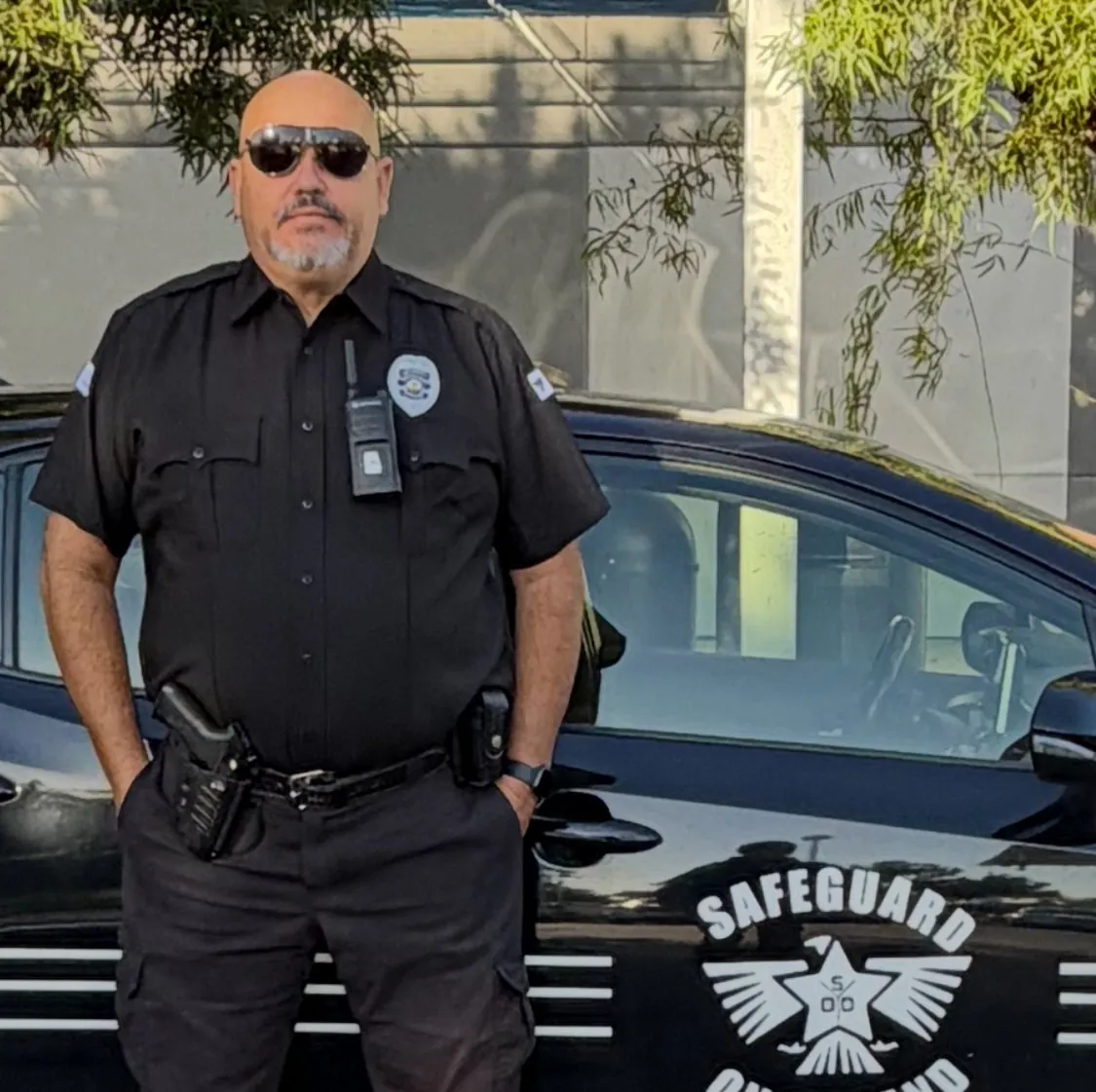
Who can perform a fire watch in California
The code says “qualified” personnel and leaves the detail to the local fire authority. In practice, fire departments look for people who are at least 18, dedicated to the watch, able to communicate clearly, familiar with the building and its extinguishers, and identifiable on sight. Many owners staff watches with their own maintenance or security employees for short impairments, which is allowed where the fire department accepts it.
For anything longer than a shift, most owners contract it out, for three reasons. A contracted watch runs 24 hours without pulling employees off their jobs. A licensed security company’s officers are already BSIS-registered and trained in observation, reporting and emergency response. And the company carries the liability insurance and produces the documentation the fire department and the owner’s insurer both want. Safeguard’s fire watch officers are BSIS-licensed, briefed on the specific site’s hazards and layout, and file GPS-timestamped hourly reports in addition to the paper log the fire department requires.
How a fire watch is set up, step by step
- System goes down (or a shutdown is planned). The owner or impairment coordinator tags the system, notifies the fire department, the alarm monitoring company, the insurer and the occupants. For planned work, the fire department usually wants a request letter before the shutdown.
- The fire department sets the terms. Patrol interval, number of officers, log format, how often the log is submitted, and any added equipment such as extra extinguishers.
- The watch starts immediately. This is where same-day deployment matters. An inspector who orders a watch at 3 PM expects an officer in the building that evening, not Monday.
- Site briefing. The officer walks the building with management: every area to cover, extinguisher locations, the evacuation route, the sprinkler riser and how to reactivate it, and the contact list.
- Rounds and logs. Every 30 to 60 minutes, around the clock, with each round written down. Supervisors check the log and the GPS record during each shift.
- Repair, test, inspect. The contractor restores the system. The fire department inspects and witnesses a test.
- Written release. The fire department issues written authorization to end the watch. Verbal release does not count. Tags come off, and the monitoring company, insurer and occupants are notified that protection is restored.
“The most common mistake we see is an owner who assumes the watch can stop when the sprinkler contractor says the system is fixed. It can’t. The fire department has to test it and release the watch in writing. We keep officers on post until that paper exists, because the one night you pull them early is the night an inspector drives by.”
David Nawabi, President & CEO, Safeguard On Demand
What drives the cost of a fire watch
Fire watch is billed by the hour, per officer, like other guard services. What moves the number:
- Duration. A four-hour hot-work watch and a three-week sprinkler replacement are very different jobs. Longer watches are scheduled in fixed shifts and priced accordingly.
- Number of officers. The fire department sets this based on building size and layout. A small retail building is one officer; a high-rise or a hospital wing can be several per shift.
- Notice. A watch booked a week ahead of a planned shutdown is cheaper to staff than one that starts in two hours. Both are available; emergency starts carry a premium.
- Hours. Fire watches run overnight and through weekends by definition, so expect those shift rates.
- Reporting requirements. Daily log submission, photo documentation and supervisor visits are standard with Safeguard; some jurisdictions require more.
- Contract. No long-term agreement is needed. A fire watch runs from the start date to the written release.
Our guide to what affects the cost of security guards in California covers the broader pricing factors.
Los Angeles County focus
Los Angeles County has two main fire authorities. The Los Angeles Fire Department covers the City of Los Angeles, including Downtown, Hollywood, the Westside and the San Fernando Valley communities of Northridge, Van Nuys, Sherman Oaks and Woodland Hills. The Los Angeles County Fire Department covers the unincorporated county and contract cities such as Santa Clarita, Palmdale, Lancaster, Carson, Compton and Whittier. Cities with their own departments, including Long Beach, Pasadena, Glendale, Burbank, Santa Monica, Torrance and Beverly Hills, publish their own fire watch standards. Confirm which authority has jurisdiction before the first shift, because the log format and the notification contact differ.
What makes LA County different in practice is the building stock. The county has the state’s largest concentration of high-rise residential and office towers, where a sprinkler or alarm impairment can mean multiple officers per shift and floor-by-floor rounds. It has a constant pipeline of tenant improvements and ground-up construction, where hot work permits and construction-phase fire watches are routine. It has large assembly venues, studios and event spaces where the fire marshal staffs watches for events. And since the January 2025 wildfires, owners in and around the Palisades and Altadena burn areas have faced fire watch orders on damaged and rebuilding properties. LA also sees frequent vacant-building watches after fires in older commercial corridors.
Safeguard On Demand covers all of Los Angeles County from our Northridge branch at 19849 Nordhoff Street and our Santa Ana headquarters, with officers available for same-day fire watch starts across the city and county. Our Los Angeles fire watch page covers local turnaround and staffing, and property owners elsewhere in the state can see how requirements play out in Sacramento and San Diego. Builders should also read our guide to construction fire watch.
Fire watch compliance checklist
- ☐ Fire department notified the moment the system went down (or before a planned shutdown)
- ☐ Alarm monitoring company, insurer and occupants notified
- ☐ Impairment tag on the system
- ☐ Fire department’s written terms received: interval, officer count, log and submission requirements
- ☐ Officers on post with no other assigned duties
- ☐ Site briefing completed: all areas, extinguishers, riser, evacuation route, contact list
- ☐ Reliable 911 communication; radios if two or more officers
- ☐ Rounds on the required interval covering every area including basements and roof
- ☐ Logbook on site, every round recorded, daily copy submitted where required
- ☐ Hot work and other hazardous operations restricted
- ☐ System repaired, tested and inspected by the fire department
- ☐ Written release received before the last officer leaves
- ☐ Tags removed; monitoring company, insurer and occupants told protection is restored
Frequently asked questions
How long can a fire sprinkler system be down before a fire watch is required in California?
It depends on the local fire authority. Many California fire departments require a fire watch when a required system will be out of service for more than four hours. NFPA 25, which the fire code references, uses ten hours in a 24-hour period for sprinklers. The fire department must be notified immediately regardless of how long the outage will last, and the fire code official can order a watch at any point.
Can a regular security guard perform a fire watch?
Yes, if the guard is assigned only to the fire watch and meets the fire department’s requirements: familiar with the building, able to communicate with the fire department, trained on extinguishers and evacuation, and keeping the log. A guard who is also doing access control or other security duties is not a compliant fire watch. Licensed security companies routinely provide dedicated fire watch officers.
How often does a fire watch officer have to patrol?
Most California local standards require a complete round of the building at least every 30 minutes. State guidance for hospital facilities specifies at least once per hour unless the fire authority sets a shorter interval. The fire department’s written terms for your specific watch control.
Who can end a fire watch?
Only the fire code official. The system has to be repaired, tested and inspected, and the fire department issues written authorization to discontinue the watch. The owner, the property manager and the sprinkler contractor cannot end it on their own, and verbal approval is not accepted.
Is a fire watch required during hot work like welding or torch roofing?
Usually yes. The California Fire Code requires a fire watch during hot work operations and for a period after the work ends, commonly 30 to 60 minutes, to catch smoldering ignition. Many jurisdictions, including Los Angeles, also require a hot work permit.
What happens if a required fire watch is not provided?
The fire department can order the building evacuated and closed until systems are restored, issue citations and daily fees, and refer the matter for enforcement. If a fire occurs, the absence of a required watch creates serious liability for the owner and can jeopardize insurance coverage.
Need a fire watch tonight?
Safeguard On Demand provides licensed fire watch officers across California with same-day starts, 24/7 dispatch, fire-department-compliant logs and no long-term contract. Tell us the building, the impairment and what the fire department has asked for, and we will have an officer on post.
Call (800) 640-2327 or request a free quote online. Serving Los Angeles County and all of California.