
Dealership lot security: the short version
Dealership lot security is a question we help California property owners and managers answer every week. The guide below covers what it involves, when it makes sense and how to get it right, with input from our licensed security guard services team. Dispatch is live 24/7 at (800) 640-2327.
Quick answer: dealership lots on the I-80 corridor lose catalytic converters, wheels and whole vehicles to crews that work in minutes — and the defense is a timed one: lighting and layout that slow the cut, randomized overnight patrols that interrupt it, and monitored cameras that put a voice on the lot before a unit arrives. We run this coverage from our Sacramento branch, thirty minutes up the corridor.
How lot crews actually work
Converter crews roll a spotter and a cutter; a saw job takes under three minutes on a high-clearance truck or hybrid. Wheel crews come with jacks and blocks; vehicle theft rings target key storage and transporter paperwork. All three share a preference: lots with fixed-schedule security — or none — along fast freeway access. Fairfield, Vacaville and Dixon’s auto rows sit on exactly that kind of access.
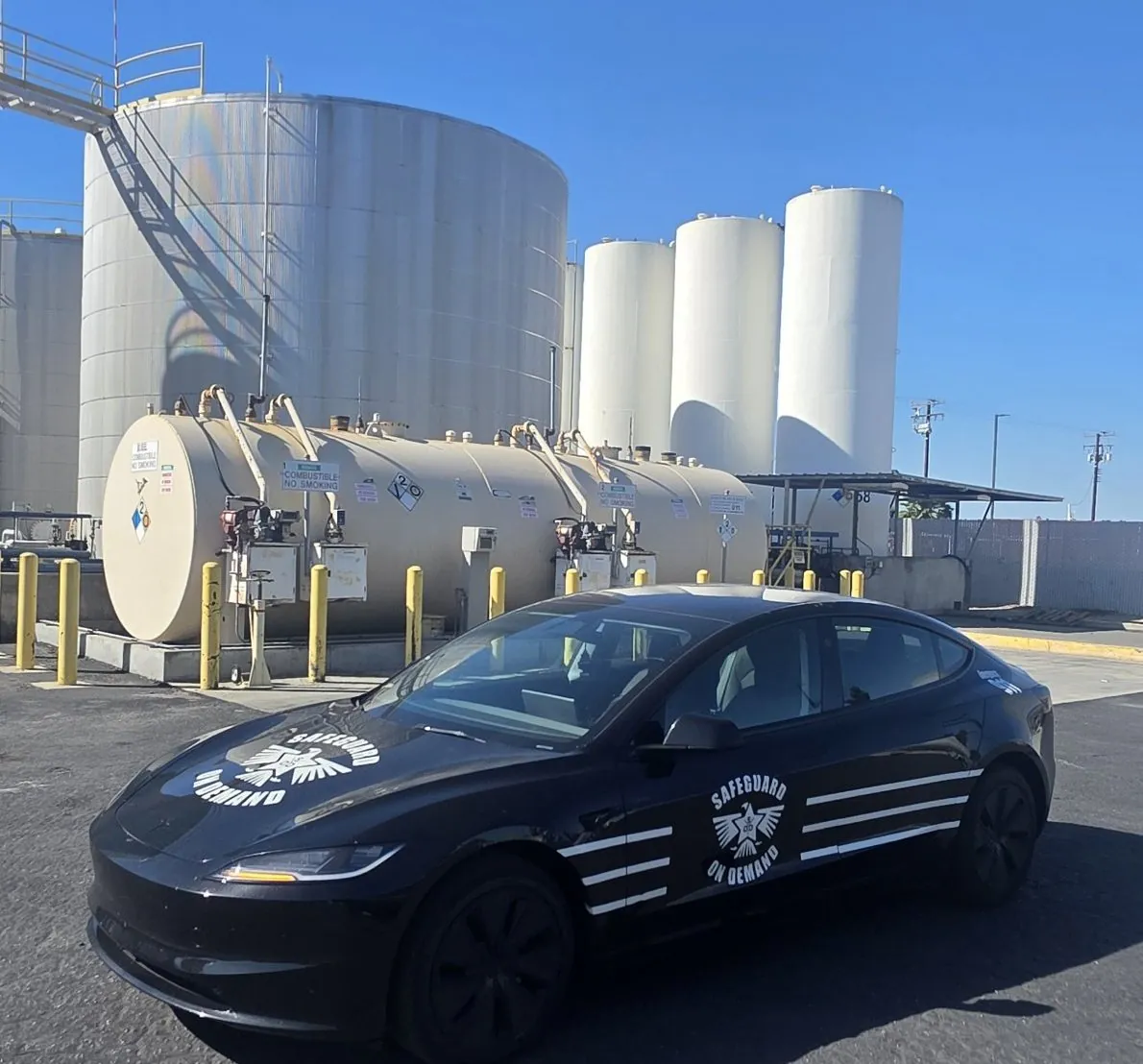
The defense plan
1. Make the three minutes longer
Park high-target inventory (trucks, hybrids) in the lit front rows, nose-in against barriers; keep back rows for low-target units. Cheap, and it moves the easy cut off your lot.
2. Randomized marked patrol all night
Multiple visits at irregular times — every pass sweeping the rows, service drive and transporter area — GPS- and photo-logged so the GM sees every pass. One lot or the whole auto row: patrol routes price per visit, and converter crews hate marked traffic they can’t time.
3. A voice on the lot
Live-monitored cameras with talk-down audio challenge anyone between patrol passes — most crews leave at the first voice. Alerts route to the patrol officer and, when warranted, local PD.
4. Standing officer where the numbers justify
High-line inventory, repeat hits or a transporter-heavy schedule can justify a dedicated overnight officer — hourly photo rounds, key-cabinet checks and a gate log for every after-hours movement.
5. The paper layer
Trespass letters on file with the PD, inventory photos current, and incident documentation that actually supports claims — every Safeguard visit and incident is timestamped and photographed by default.
It’s not just dealerships
The same I-80 logic covers Fairfield and Vacaville distribution centers, food production plants running 24/7, and new-home communities — plus Vallejo‘s waterfront industrial. County map at the Solano County hub.
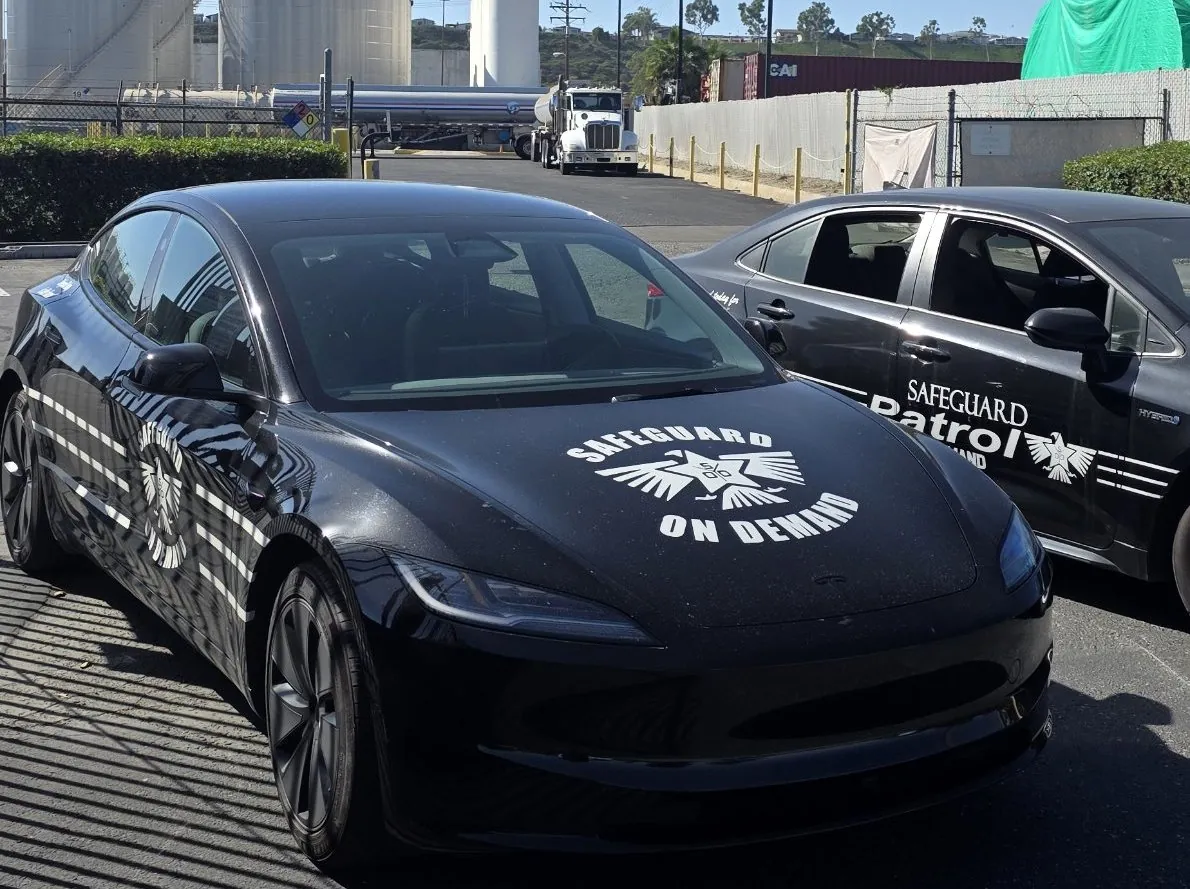
What California’s 2024 catalytic converter laws mean for your lot
Three state laws took effect on January 1, 2024, and they change the math on dealership lot security.
SB 55 requires a dealer to have the catalytic converter engraved or etched with the vehicle’s VIN before a new or used vehicle is sold. AB 1519 makes it a crime to remove a VIN marking from a converter and to possess three or more converters with the markings removed. AB 641 tightened the rules on who may dismantle vehicles and buy used parts.
| Law | What it requires | What it means on the lot |
|---|---|---|
| SB 55 | VIN etched on the converter before a vehicle is sold | Etch at PDI, not at delivery — etched inventory is harder to fence and easier to trace |
| AB 1519 | No removing VIN marks; possessing 3+ stripped converters is a crime | A converter recovered from a cutter becomes evidence; photograph VIN etchings for your records |
| AB 641 | Stricter licensing for dismantlers and parts buyers | Fewer legitimate outlets for stolen parts; report thefts with VIN lists so recyclers can flag them |
None of these laws stop a saw at 3 a.m. What they do is raise the cost of fencing what gets cut, which is why dealership lot security works best when the physical program and the paper program run together: etched inventory, current photo records, a trespass letter on file and incident reports that name the VIN. Our officers write every report to support a claim and, where it goes that far, a prosecution.
Dealership lot security, step by step: the first 30 days
Days 1–3: the lot walk and threat map
We walk the lot with the GM or fixed-ops manager at dusk, when the lighting really shows. The output is a one-page map: where crews can park unseen, which rows hold high-target units, where the fence line is weak, how transporters stage, and where keys live after close. The map decides everything that follows.
Days 3–7: cheap fixes first
Move trucks and hybrids into lit front rows nose-in against barriers, replace dead lamps, trim the hedge that hides the back fence, and lock the service drive gate at close. These cost almost nothing and remove the easiest targets before any officer is scheduled.
Week 2: the dealership lot security patrol route and post orders
We write the mobile patrol route: three to five randomized passes a night with a minimum and maximum gap, a sweep order (front rows, service drive, body shop lot, transporter area, back fence), what to photograph on each pass and when to call police. Post orders go into the officer app so the same checks happen whoever is on shift.
Week 2–3: cameras with a voice behind them
Where cameras exist, we connect them to live monitoring so a monitoring operator can challenge a crew over the speaker and dispatch the patrol officer while the saw is still in the bag. Where they don’t, a solar surveillance trailer covers the back rows without trenching.
Week 3–4: reporting and the 30-day review
Every pass produces a timestamped, GPS-stamped photo report; every incident produces a written report the same night. At 30 days we sit down with the pass logs and incident reports and adjust the route, the hours and the coverage mix.
What drives the cost of dealership lot security
Quotes follow a free lot walk, but the factors are predictable. Lot size and the number of separate lots set the time per pass. Coverage hours matter more than most dealers expect — dusk-to-dawn patrol is a different budget from a 24/7 standing post.
Patrol passes price per visit; standing officers price per hour; armed coverage costs more than unarmed and is rarely justified on a lot. Camera integration adds monitoring time but usually reduces officer hours. The biggest lever on an auto row is sharing a patrol route with neighboring dealers: the same officer covers four lots in one loop, and each store pays for a fraction of the night. See our guide to what drives security guard cost in California for the general picture.
Mistakes that get lots hit again
- Patrol at the same time every night. Crews watch for a week and schedule around it. Randomize the windows.
- Cameras with nobody watching. Recorded footage of a three-minute cut is a souvenir. Monitored cameras with a voice-down and a dispatched officer are a deterrent.
- Trucks and hybrids in the back rows. High-clearance, high-value converters belong in the lit front rows.
- No trespass letter on file. Without a letter of agency, officers responding to your lot have less to work with after hours.
- Keys that are easy to find. Vehicle-theft rings go for the key cabinet and transporter paperwork. Lock both and log every after-hours release.
- Thin incident reports. A report without photos, times and VINs weakens the insurance claim and gives police nothing to act on.
- Going it alone on the auto row. The lot next door with no coverage is where the crew parks. Shared routes protect everyone.
Solano County and the I-80 corridor: local notes
Dealership lot security along I-80 has a specific geography. Fairfield and Vacaville auto rows sit minutes from on-ramps in both directions, which is why they draw crews from the Bay Area and Sacramento alike. Vallejo adds waterfront industrial and port traffic, and Davis and the Yolo side of the corridor bring the same freeway logic to a college town. Coverage for all of it runs from our Sacramento office with 24/7 dispatch from headquarters, and the Solano County hub lists every city we serve in the county. Officers assigned here carry a current BSIS guard card, which you can verify on the Bureau of Security and Investigative Services site before you sign anything.
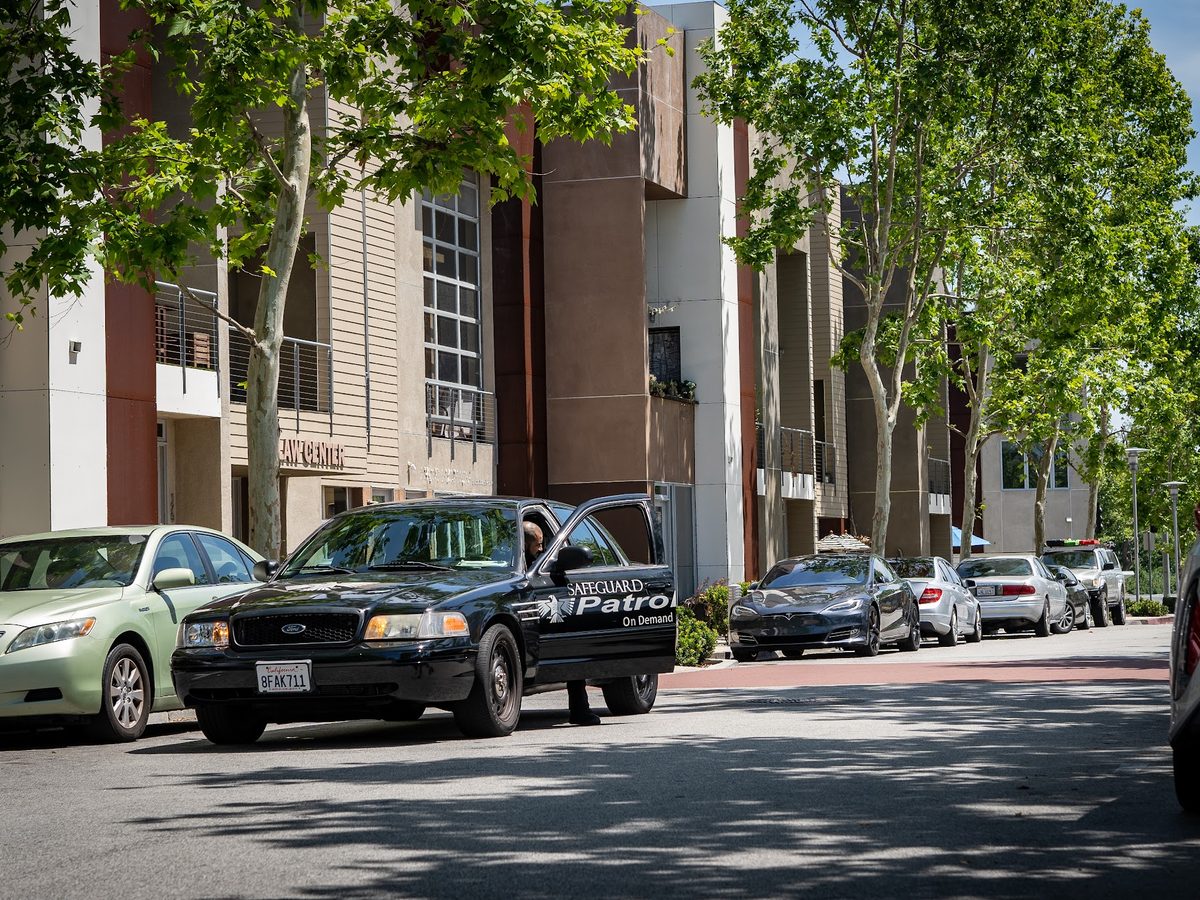
What the GM sees every morning
Dealership lot security only works if the people paying for it can see it happen. Each patrol pass closes with a timestamped, GPS-stamped photo report: the rows swept, the gates checked, the transporter area, anything out of place. Reports land in the manager’s inbox before the store opens, and a weekly summary shows pass times across the week so you can confirm the schedule really was randomized.
Incidents get a separate written report the same night — what was seen, when police were called, which units were involved by stock number and VIN, and photos of any damage or tools left behind. That is the document your insurer and the responding agency actually want, and it is written by the officer who was there, not reconstructed days later.
Who dealership lot security is for
Franchise stores on the Fairfield and Vacaville auto rows are the obvious case, but the same dealership lot security program fits independent used-car lots, RV and powersports dealers, fleet yards with upfitted trucks, and body shops holding customer vehicles overnight. Anywhere high-value inventory sits outdoors near a freeway ramp has the same three-minute problem. If you manage more than one of these in the county, ask about a shared route; one marked unit covering several lots in a loop is how most of our I-80 clients keep dealership lot security affordable without leaving the back rows exposed.
Dealership lot security checklist
- ☐ Dusk lot walk completed and threat map on file
- ☐ High-target units in lit front rows, nose-in
- ☐ Dead lamps replaced; back fence line visible from the street
- ☐ Converters VIN-etched at PDI and photographed
- ☐ Trespass letter of agency filed with local police
- ☐ Randomized patrol route with written post orders
- ☐ Cameras connected to live monitoring with voice-down
- ☐ Key cabinet and transporter paperwork locked and logged
- ☐ Photo reports reviewed weekly; incidents reported the same night
- ☐ 30-day review scheduled with the patrol provider
Dealership lot security: frequently asked questions
What does overnight lot coverage cost?
Patrol routes price per visit per night; standing posts price hourly. Most single-point dealerships start with three to five patrol passes plus monitored cameras, with a fixed quote after a free lot walk. Sharing a route with neighboring dealers lowers each store’s share.
Can you coordinate with our DMS or key system?
Yes. Officers log against your key cabinet and transporter schedule, and after-hours releases follow your written procedure or do not happen.
How fast can dealership lot security start?
Same day to 48 hours anywhere on the I-80 corridor. Call (800) 640-2327 and we schedule the lot walk first.
Do the 2024 catalytic converter laws apply to used vehicles?
SB 55 applies to new and used vehicles sold by a dealer or retailer: the converter must be engraved or etched with the VIN before the sale. Etching at PDI keeps inventory compliant and less attractive to thieves.
Is armed security necessary for a dealership lot?
Rarely. Converter and wheel crews avoid confrontation, so a visible, unpredictable unarmed patrol with monitored cameras and fast police coordination handles most lots. Armed coverage is reserved for sites with a specific, documented threat.
Will a patrol company share coverage across several dealerships?
Yes, and it is the most cost-effective setup on an auto row. One officer covers several adjoining lots in a single randomized loop, and each dealership receives its own photo reports.
Before the next cut
Free lot assessment via the Solano County hub or (800) 640-2327, 24/7.
If you are weighing dealership lot security for a property in California, Safeguard On Demand can walk the site with you and put a written plan in place. Call (800) 640-2327 any time, day or night, or request a free quote online.