

Updated October 2026 · 5 min read · Reviewed by Safeguard On Demand
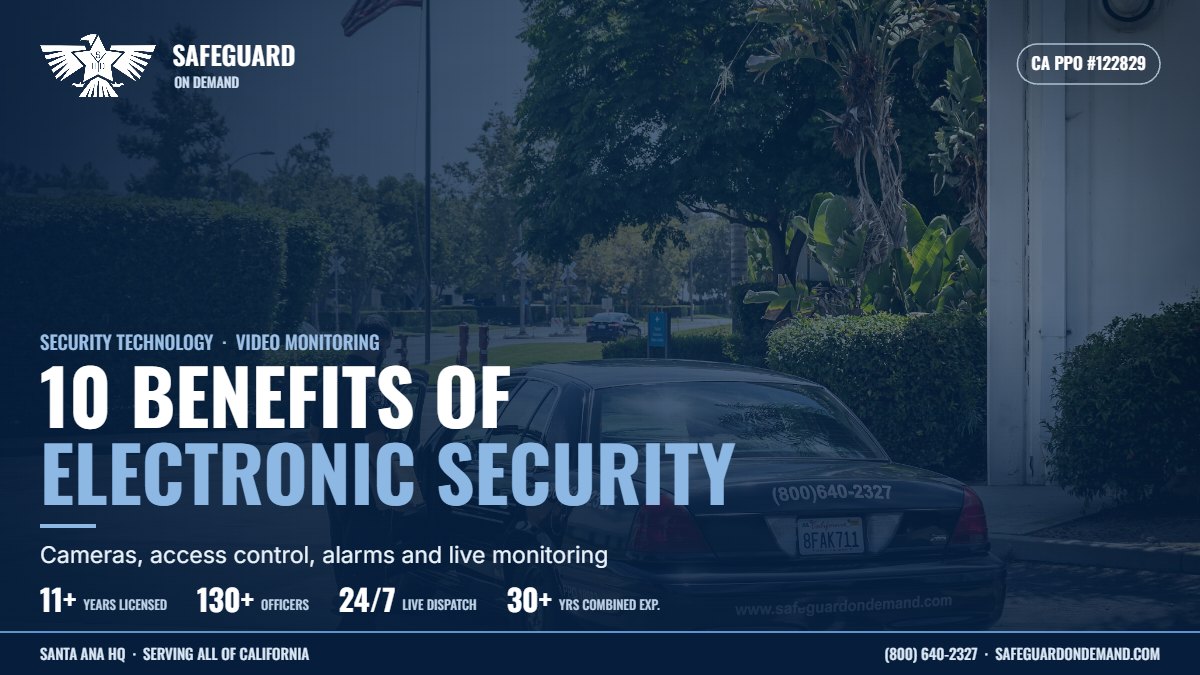
Commercial electronic security systems, including video cameras, access control, intrusion alarms, and live remote monitoring, have become standard for businesses of every size. They extend your eyes across large properties, record evidence, control who can enter, and alert you the moment something goes wrong.
But technology works best as part of a complete security plan. This article covers ten benefits of commercial electronic security systems, the main types to consider, and why the strongest California security programs pair technology with trained officers who can respond.
Key Takeaways
- ✓Electronic systems watch, record, and control access 24 hours a day.
- ✓Live monitoring turns cameras from a recording tool into a real-time deterrent.
- ✓Access control and alarms create audit trails and immediate alerts.
- ✓Technology plus trained officers delivers both detection and response.
Types of Commercial Electronic Security Systems
Video surveillance (CCTV)
Cameras that record activity across entrances, parking, and interiors.
Remote video monitoring
Live operators who watch cameras, issue audio warnings, and dispatch help.
Access control
Badges, fobs, keypads, or mobile credentials that control and log entry.
Intrusion alarms
Door, window, and motion sensors that trigger alerts after hours.
Intercoms and audio
Two-way communication at gates, doors, and remote areas.
Fire and life safety
Fire alarms and sprinklers that require monitoring and inspection.
10 Benefits of Commercial Electronic Security Systems
1. Visible deterrence. Cameras, signs, and audio speakers tell would-be offenders the property is watched, which discourages many incidents before they start.
2. Real-time detection. With remote video monitoring, trained operators spot trespassers, break-in attempts, and suspicious behavior as they happen and can issue live audio warnings.
3. Evidence for investigations. Clear video helps police identify suspects, supports insurance claims, and resolves disputes about what happened.
4. Access control and audit trails. Electronic access systems decide who enters each area and when, and they record every entry, which helps investigations and enforces policies.
5. Instant alerts. Intrusion alarms and video analytics notify monitoring centers, managers, or patrol officers the moment a door opens after hours or someone crosses a perimeter.
6. Coverage of large or remote areas. Cameras and sensors watch parking lots, yards, construction sites, and perimeters that would take several officers to cover on foot.
7. Lower long-term costs. Technology reduces the number of officer hours needed on lower-risk sites, especially overnight, while maintaining strong protection.
8. Remote visibility for owners. Managers can check on properties from a phone or computer, review incidents, and verify that procedures are being followed.
9. Insurance and compliance support. Many insurers, landlords, and regulators expect documented security measures, and some may offer better terms for monitored systems.
10. Better use of security officers. When technology handles routine watching, officers can focus on patrols, customer service, and response, which is where people add the most value.
Why Technology Alone Is Not Enough
A camera cannot ask someone to leave, help an injured employee, lock a gate that was left open, or meet the fire department at the door. Recorded video mostly helps after the damage is done, and alarms without a timely response often lead to frustration and false-alarm fees. The real value of electronic security comes when it is connected to people who can act.
That is why we recommend pairing systems with trained officers. Monitoring operators verify what is happening, then dispatch a mobile patrol officer or alert an on-site officer, who can respond in person, secure the property, and coordinate with police.
Technology vs. Officers vs. Combined
| Capability | Technology only | Officers only | Combined |
|---|---|---|---|
| 24/7 watching | Yes | Costly | Yes |
| Real-time deterrence | With live monitoring | Yes | Yes |
| Physical response | No | Yes | Yes |
| Evidence and records | Video and logs | Written reports | Both |
| Customer service | No | Yes | Yes |
| Cost efficiency | High | Moderate | High |
Cameras are great at watching. People are great at solving problems. The best results come when a live operator sees something, an officer shows up, and the client gets a report with both the video and what we did about it.
— David Nawabi
President & CEO, Safeguard On Demand
Choosing the Right System for Your Business
Start with a site assessment that identifies entry points, blind spots, high-value areas, and the hours when you are most exposed. Choose cameras with good low-light performance for parking and perimeter areas, make sure lighting supports camera coverage, and decide who will watch the cameras and who will respond. Integrate access control with your visitor and employee policies so the system reflects how your business actually works.
Safeguard On Demand offers security consulting and remote video monitoring, combined with licensed officers and patrols, so technology and people work as one security solution.
Integrated Security Across California
As a licensed California private patrol operator, Safeguard On Demand protects businesses, construction sites, warehouses, apartment communities, and HOAs throughout Los Angeles, Orange County, San Diego, the Inland Empire, Silicon Valley, the Central Valley, and Sacramento. Explore our full range of security services.
Frequently Asked Questions
What is a commercial electronic security system?
It is a combination of technology such as video cameras, access control, intrusion alarms, intercoms, and monitoring that protects a business property, controls entry, and alerts responders to problems.
Is video monitoring better than recorded cameras?
Live remote video monitoring is more effective at preventing incidents because operators can issue audio warnings and dispatch response in real time, while recorded cameras mainly provide evidence afterward.
Can electronic security replace security guards?
Technology can reduce the number of officer hours needed, especially overnight, but it cannot respond physically, assist people, or secure a property. Most businesses get the best results by combining both.
How does access control improve security?
Access control limits who can enter each area, records every entry, and makes it easy to revoke access when employees leave or credentials are lost.
Does Safeguard On Demand install security systems?
We provide security consulting, remote video monitoring, and officers and patrols that integrate with your systems. Contact us to discuss the right combination for your property.
Electronic security systems extend your protection around the clock, and trained officers turn alerts into action. To design an integrated plan for your business, request a free quote or call Safeguard On Demand at (800) 640-2327.
Get a free security assessment
Licensed armed and unarmed officers, patrols and fire watch across California. Call (800) 640-2327 or request a quote online.