Mobile Patrol Security
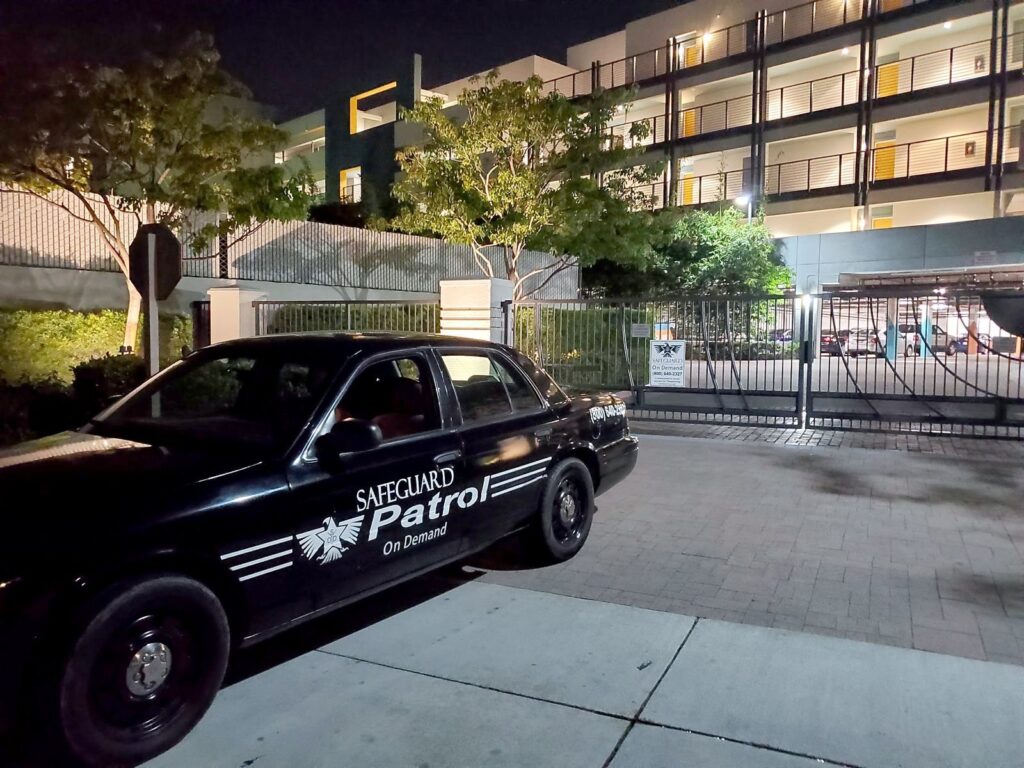
Marked Safeguard patrol units that visit your property several times a night at unpredictable times — checking doors, lots and perimeters, responding to alarms and sending GPS-verified photo reports.
Unpredictable times so patrols cannot be timed.
Every visit logged with location and time.
Patrol units respond to alarms and camera alerts.
Open and close gates, doors and amenities.
Quick answer
Mobile patrol security is a service in which a licensed security officer in a marked vehicle visits a property several times during a shift — usually at random times — to check doors, gates, lots and perimeters, deter trespassers, enforce rules, respond to alarms and document each visit with GPS check-ins and photos. It costs less than a full-time guard and covers properties that need regular checks rather than a constant presence.
The problem
Break-ins, trespass and vandalism cluster in the hours when properties are empty.
Closed businesses, vacant units and quiet lots are easy targets overnight.
Alarms that no one checks lead to losses and false-alarm fines.
Many sites need regular checks, not an officer all night.
Patrol options
Choose visits, hours and duties.
Close-in patrols for large communities and campuses.
Our standards
Proof of every visit, not just an invoice.
Location and time logged on every visit.
Timestamped photos of gates, doors and problem areas.
Checkpoints, duties and contacts approved by you.
BSIS Guard Card verified before assignment.
Before you sign
Here is how we answer.
| Ask the vendor | Safeguard On Demand |
|---|---|
| How many visits will we get? | The number of visits per night is set in your proposal and can change with notice. |
| How do we know the patrol came? | GPS check-ins and timestamped photos in a report after every visit or each morning. |
| Do you respond to alarms? | Yes — patrol units respond to alarms and verified camera alerts. |
| Can patrol officers lock and unlock gates or amenities? | Yes, on the schedule in your patrol orders. |
| Can you enforce parking rules? | Yes, with a resident or tenant safelist and rules you approve. |
| Is there a long-term contract? | No long-term contract. |
Properties we patrol
One property or a route of many.
Statewide
Served from the office nearest your site, with officers across 13 California counties.
How it works
Often within a few days.
01
We map gates, doors, lots and problem areas.
02
Checkpoints, visit count and duties written and approved.
03
Randomized visits with GPS check-ins and photos.
04
Visit reports and adjustments to trends.
Choosing coverage
Mobile patrol fits properties that need regular checks rather than a constant presence — apartment communities, HOAs, business parks, retail centers after closing, vacant buildings and early-phase construction. It is usually the most cost-effective way to cover nights and weekends.
Choose a standing guard when you need someone present all the time. Many clients combine patrols with remote video monitoring, so operators watch cameras and dispatch the patrol only when something is happening. For communities, see HOA security; for unauthorized parking, parking enforcement.
California requirements
Patrol officers must hold a BSIS Guard Card and work for a licensed private patrol operator. If they wear a uniform, it must carry “private security” shoulder patches with the company name, and no uniform, title or insignia may suggest a connection to any government agency (Business and Professions Code §7582.26).
Patrol vehicles may not be painted to look like police cars (Vehicle Code §27605), and vehicles with amber warning lights must display “PRIVATE SECURITY” or “SECURITY PATROL” on the rear and both sides (Vehicle Code §25279). Officers have the same arrest powers as any private person (Penal Code §837), so they observe, document and call police.
Verify any company or officer on the state’s DCA License Search.
Budgeting
Priced to visits and duties.
More visits, more coverage.
Quick checks vs. longer walk-throughs.
Lock-ups, enforcement and alarm response.
Nearby properties share patrol cost.
Nights only, weekends or 24/7.
Remote cameras with patrol dispatch.
A licensed officer in a marked vehicle visits your property several times a shift at random times, checks key areas, deters trespassers, responds to alarms and logs each visit with GPS and photos.
The number is set in your proposal based on your risks and budget, and can be changed with notice.
Usually, yes, because you pay for visits rather than a full shift.
Yes. Our units respond to alarms and verified camera alerts.
Yes, under written rules you approve, including warnings and tow coordination.
Across 13 California counties from offices in Santa Ana, Los Angeles (Northridge), San Diego, the Inland Empire, Sacramento and Silicon Valley.