
Apartments & Condominiums
Apartment & Condo Security Guards in California
Night patrols, garage and amenity checks, parking enforcement and live camera monitoring for apartment and condo communities — fewer break-ins, fewer resident complaints, and a record of every visit.
- Garage & amenity checks
- Online guest safelist
- No long-term contract
- Se habla español
Garage & lot focus
Where most multifamily crime happens.
Amenity rules enforced
Pools, gyms and clubhouses kept for residents.
Guest safelist
Residents register guests online.
Manager-ready reports
Photo reports after every shift.
Quick answer
What security do apartment communities in California need?
Most California apartment and condo communities need security that targets their real problems: vehicle break-ins and catalytic-converter theft in garages, trespass and loitering in common areas, amenity misuse and guest parking. A typical program combines randomized night patrols, garage and amenity checks, parking enforcement with a resident safelist, and live camera monitoring. California law also requires landlords to maintain deadbolts and window locks (Civil Code §1941.3) — security officers add the human layer.
Key facts
- Garage break-ins and converter theft are top issues
- Patrols + parking enforcement + monitoring
- Landlords must maintain locks (Civil Code §1941.3)
- Online guest safelist for residents
- Photo reports for property managers
The problem
Where multifamily communities lose
Problems at apartment communities follow patterns — and they all land on the property manager’s desk.
Garage break-ins and converter theft
Parking garages and carports see smash-and-grab break-ins and catalytic converters cut overnight.
Trespass and encampments
Non-residents in stairwells, laundry rooms and common areas need lawful, humane and documented removal.
Complaints and liability
Unresolved security issues drive resident turnover, bad reviews and negligent-security claims.
Coverage options
Apartment security services
Built around your community and budget.
Our standards
What every apartment program includes
Designed for property managers.
Post orders by community
Garage, amenity and parking rules in writing.
Photo reports
Every patrol documented for the manager.
Resident-friendly officers
Respectful, de-escalation-trained presence.
BSIS-licensed officers
Guard Card and background check.
For property managers
Questions to ask an apartment security company
Here is how we answer.
| Ask the vendor | Safeguard On Demand |
|---|---|
| How many patrol visits will we get? | Set in your proposal based on incident history; randomized so they cannot be predicted. |
| Do officers check garages and stairwells? | Yes — every patrol includes garages, stairwells, laundry rooms and amenities. |
| How do you handle trespassers and encampments? | Lawful, humane and documented: request to leave, document, and involve police or outreach when needed. |
| Can residents register guests? | Yes, through our online safelist. |
| Will we get reports for owners? | Yes — patrol and incident reports with photos. |
| Is there a long-term contract? | No long-term contract. |
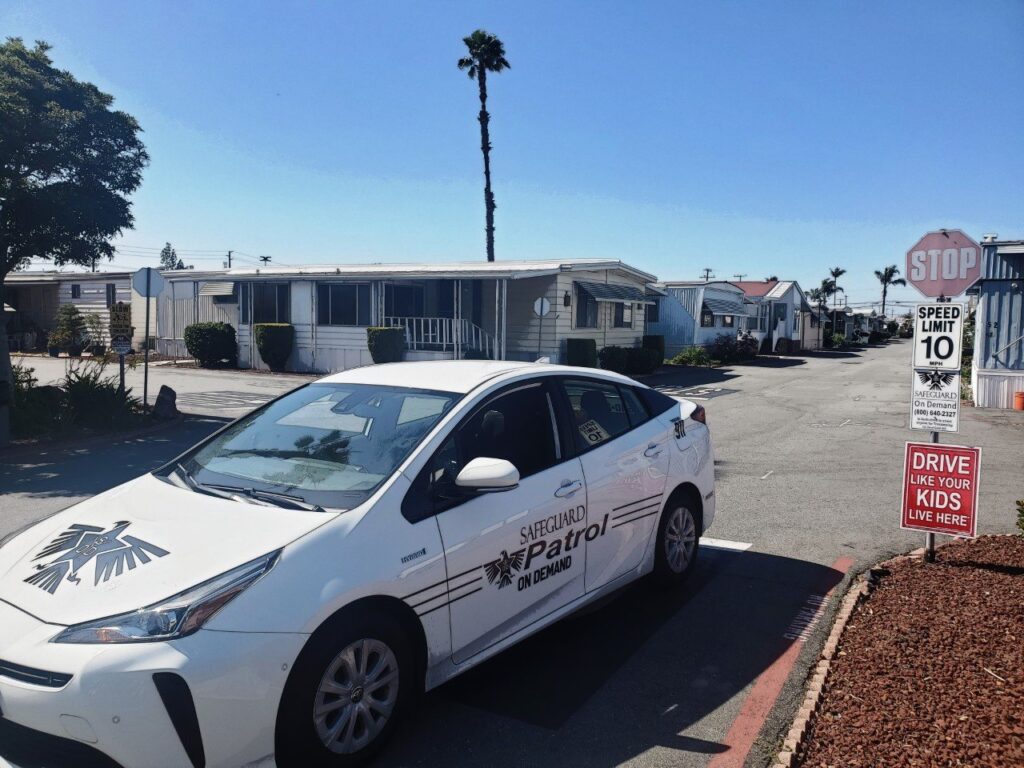
Communities we protect
Security for every kind of multifamily property
From garden-style communities to high-rise towers.
Statewide
Apartment security across California
Served from the office nearest your site, with officers across 13 California counties.
How it works
How apartment security starts
Built with your property manager.
01
Community walk
Garages, gates, amenities and incident history reviewed.
02
Post orders
Patrol, amenity and parking rules approved.
03
Resident notice
Safelist access and enforcement notice sent.
04
Reports & review
Photo reports and monthly check-ins.
Choosing coverage
Patrol, on-site officer or cameras?
Most apartment communities get the best value from randomized mobile patrol several times a night, combined with parking enforcement and an online guest safelist. Large communities or properties with ongoing trespass may need an on-site officer during evening and overnight hours.
Remote video monitoring is especially effective in garages, where operators can warn intruders in real time. Read our tips in 5 reasons to hire a security guard for your apartment building.
California considerations
What California apartment owners should know
California Civil Code §1941.3 requires landlords to install and maintain working deadbolts on each main entry door and locking devices on windows that open, and to keep common-area door locks compliant with fire and safety codes. The statute also preserves the landlord’s general duty of care — which is why documented security measures matter when a crime occurs on the property.
Your on-site staff (leasing, maintenance) are covered by California’s workplace violence law, SB 553 (Labor Code 6401.9). Every officer must hold a BSIS Guard Card and work for a licensed private patrol operator — 8 hours of Power to Arrest and Appropriate Use of Force training before registration, 32 more hours within six months, and 8 hours of continuing training every year. Verify any company or officer on the state’s DCA License Search.
Community security checklist
- Deadbolts and window locks maintained
- Garage and gate lighting working
- Guest parking rules and signage
- Trespass procedure in writing
- Cameras on garages and entries
- Staff workplace violence plan current
Budgeting
What affects the cost of apartment security
Priced to your community.
Patrol visits
Visits per night.
Community size
Units, buildings and garages.
Parking enforcement
Enforcement volume and safelist.
On-site officer
Evening or overnight posts.
Monitoring
Garage and entry cameras.
Contract term
Lease-up or ongoing.
Apartment security FAQs
No law requires guards at apartments, but landlords must maintain locks and keep a general duty of care; many communities use patrols to reduce crime and liability.
Randomized patrols, garage checks, lighting improvements and monitored cameras with live voice-down.
Yes, with written rules, proper signage and our online guest safelist.
Lawfully and humanely: ask them to leave, document, and involve police or outreach services when needed.
It depends on patrol visits, community size and services. We provide a free assessment and written proposal.
Across 13 California counties from offices in Santa Ana, Los Angeles (Northridge), San Diego, the Inland Empire, Sacramento and Silicon Valley.
Where we provide this coverage
Posts are staffed from the nearest of our six California offices — same day in most areas. Free assessment: (800) 640-2327.