Industries we protect
Every industry has its own risks and its own California rules. Our officers, patrols and monitoring are built around both — from HOAs and job sites to hospitals, dispensaries, courthouses and data centers.
Every officer holds a BSIS Guard Card.
A live person answers, day or night.
Hourly reports with timestamped photos.
Six offices, 13 California counties.
Quick answer
The right security program depends on what you protect. A construction site needs overnight patrols and camera towers; a hospital needs de-escalation and Cal/OSHA §3342 incident documentation; a cannabis dispensary must meet state security rules; an HOA needs lawful parking enforcement and courteous gate officers. Each page below explains the risks, the California laws that apply and how Safeguard On Demand staffs that kind of site.
All industries
Each industry page explains the risks, the California rules that apply and how we staff it.
Common ground
Different sites, the same expectations.
Covered shifts and supervisors who check.
Reports that stand up for insurers, boards and regulators.
Officers who follow California law and your policies.
Security services
Combine on-site officers, patrols and technology into one program — and one invoice.
Firearm-permitted officers for banks, cannabis, high-value and high-risk posts.
Visible deterrence, access control and customer-friendly officers.
Fixed posts at gates, lobbies, entrances and loading docks.
Live operators watch your cameras, talk down intruders and dispatch.
Solar camera units for job sites, lots and land without power.
Discreet close protection for executives, families and VIPs.
Front-desk officers who manage visitors and deliveries.
On-site vulnerability reviews and a written security plan.
The Safeguard standard
Specific commitments, not adjectives. Ask any security company you are considering to match them.
Duties, patrol routes and escalation contacts you approve.
Timestamped photos and notes from the officer on post.
Unannounced visits to confirm the post is covered and alert.
BSIS Guard Card, background check and site orientation.
Our approach
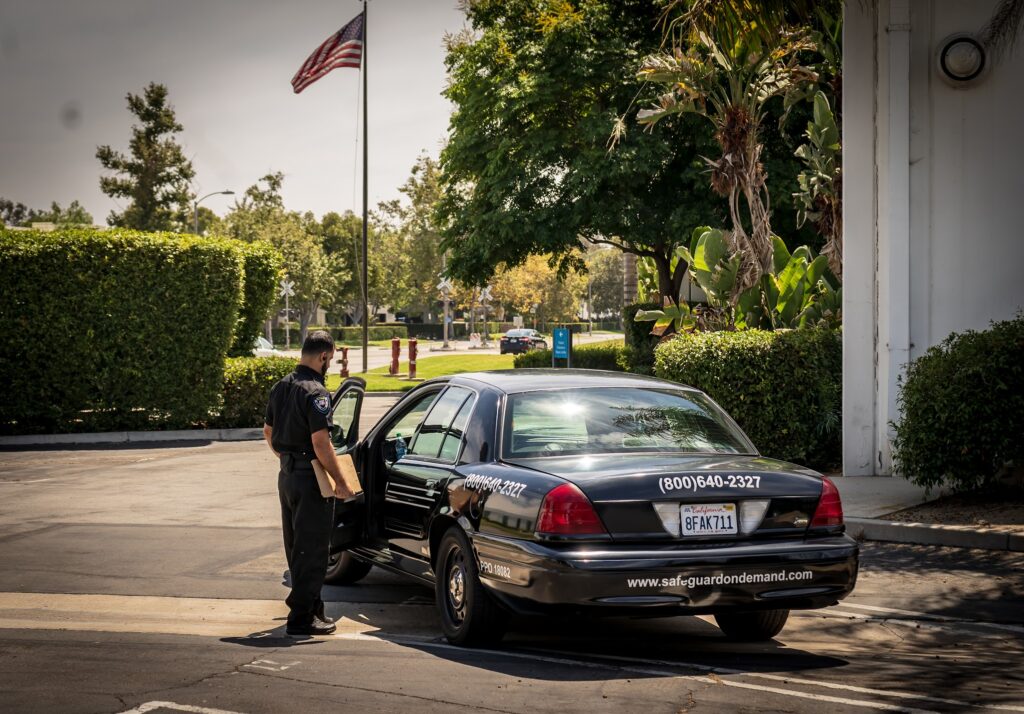
We start with a site review and your industry’s requirements, write post orders around them, and orient officers before their first shift. Then we report on every shift so you can see the work.
Statewide
Served from the office nearest your site, with officers across 13 California counties.
How it works
From first call to first shift, with nothing left to guesswork.
01
We review your site, hours, risks and incident history — on site or by phone.
02
A clear scope, post orders and pricing for your approval.
03
Officers learn your property, contacts and procedures before day one.
04
Shift reports, supervisor checks and regular account reviews.
Choosing coverage
Unarmed officers handle most posts in California — access control, visible deterrence, customer service and reporting at HOAs, apartments, offices and retail centers. Armed officers fit sites with a real threat of violence or high-value assets, such as cannabis dispensaries, banks and some construction or logistics sites. Read our guide to armed vs. unarmed security guards in California.
A full-time officer is right when you need someone present all the time. Mobile patrol costs less and works when randomized checks, lock-ups and alarm response are enough. Remote video monitoring and camera towers cover large or remote areas overnight, and fire watch is a separate service required when fire protection systems are impaired. Many clients combine them — for example an on-site officer during business hours and monitoring overnight. Not sure? Start with a free security risk assessment.
California requirements
In California, a company that provides security guards to others must be licensed by the Bureau of Security and Investigative Services as a private patrol operator (Business & Professions Code §7582.1). Every officer must hold a BSIS Guard Card and work for a licensed private patrol operator — 8 hours of Power to Arrest and Appropriate Use of Force training before registration, 32 more hours within six months, and 8 hours of continuing training every year.
Armed officers need more: a BSIS firearm permit (age 21 or older, a state-approved firearms course, a psychological assessment and regular range requalification). Officers may carry a firearm openly only while in uniform; concealed carry requires a separate concealed-carry license. California employers also have obligations of their own — most must maintain a written workplace violence prevention plan under SB 553 (Labor Code 6401.9), and security officers and incident reports help support it.
Verify any company or officer on the state’s DCA License Search before you hire.
More than 40 — including HOAs, apartments, construction, healthcare, retail, cannabis, warehouses and logistics, government, schools, events, hotels and data centers.
Each industry page explains the main California rules that affect security, and our post orders are written around them.
Yes — consistent officers and reporting across locations, with one account manager.
Yes, plus patrol, remote monitoring, camera towers and fire watch.
No long-term contract.
We protect many other kinds of sites. Tell us about yours and we’ll build a program around it.