Construction Site Security
On-site officers, marked night patrols, fire watch and live camera monitoring that stop copper theft, equipment loss and trespass — scaled to each phase of your build.
Coverage that changes as the project moves from grading to closeout.
Timestamped photos and incident reports for your superintendent.
Lock-ups, gate checks and patrols around staged materials.
Fire watch officers when systems or hot work require it.
Quick answer
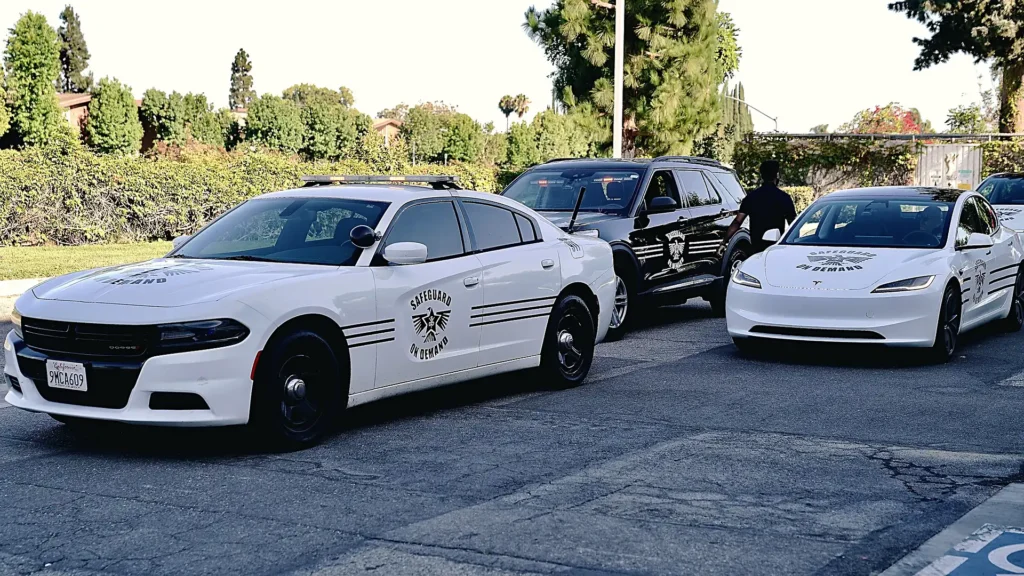
Construction site security protects an active job site from theft, vandalism, trespass and fire, usually when crews are gone — nights, weekends and holidays. It typically combines on-site security guards at the gate or trailer, mobile patrol visits, fire watch when fire protection is incomplete, and remote video monitoring with live voice-down. Safeguard On Demand builds a plan for each phase of the project and reports to the superintendent after every shift.
The problem
An open site with expensive, portable materials and no one there at night is an easy target. Most losses we see follow the same patterns.
Wire, pipe, fixtures and appliances disappear between the end of one shift and the start of the next — often after being staged for install.
Generators, power tools, fuel and even heavy equipment are taken from unlocked conex boxes and open lots.
Trespassers, encampments and joyriders create injury liability and vandalism that delay the schedule.
Coverage options
Mix and match — most projects use more than one.
Gate control, sign-in of crews and deliveries, and roving checks of the perimeter and staged materials.
Marked vehicle visits several times a night at randomized times, with lock checks and photos.
Timed, logged rounds during hot work or while sprinklers and alarms are not yet in service.
Mobile surveillance units and live operators who issue voice-downs and dispatch patrol or police.
Our job-site standards
Your superintendent gets the information they need without chasing it.
Gate procedures, delivery rules and lock-up checklists that change with the project.
Timestamped photos of gates, containers and high-value areas.
Unannounced visits from the office nearest your project.
Guard card, background check and training before assignment.
For the superintendent
Here is how we answer the questions general contractors ask most.
| Ask the vendor | Safeguard On Demand |
|---|---|
| Can coverage change as the project changes? | Yes. Add or remove posts, patrol visits or cameras with notice as the project moves through phases. |
| Do you provide fire watch too? | Yes — the same team can cover fire watch during hot work or system impairments. |
| How do we know patrols happened? | GPS-verified check-ins and timestamped photos on every visit, in a daily report. |
| Can you work with our camera system? | Yes. Our operators can monitor compatible systems, or we deploy mobile camera towers. |
| Are you licensed and insured? | Licensed California private patrol operator, bonded and insured; certificates issued with every proposal. |
| How fast can you start? | Most sites are covered within 24–48 hours of a signed agreement; emergencies can start sooner. |
Projects we protect
From ground-up multifamily to tenant improvements and public-works-style projects.
Statewide
Served from the office nearest your site, with officers across 13 California counties.
How it works
Fast to start, easy to adjust.
01
We review the fence line, gates, lighting, staged materials and theft history.
02
Guards, patrols, fire watch and cameras recommended for the current phase.
03
Officers are oriented on gate rules and lock-up procedures before day one.
04
Daily reports to the superintendent; coverage adjusted as the build progresses.
Choosing coverage
A full-time guard makes sense when you have high-value materials on site, frequent deliveries, a busy public frontage or a history of theft. Mobile patrol is a cost-effective fit for smaller sites or early phases, with several unannounced visits a night. Camera towers with live monitoring cover large, open sites where a single guard cannot see everything, and dispatch a patrol only when something is happening.
Many projects combine all three: a guard at the main gate, patrols to check the perimeter and laydown yards, and monitored cameras on the far side of the site. If hot work or impaired sprinklers are involved, add a fire watch. For high-value equipment or a recent armed incident, an armed security guard may be warranted. Our guide to types of security guard services explains each option in more detail.
California considerations
Security officers on your site must hold a BSIS Guard Card and work for a licensed private patrol operator — you can verify both on the state’s free DCA License Search. Ask for a certificate of insurance naming you as additional insured where your contract requires it.
Under the California Fire Code, the local fire authority can require a fire watch on construction and demolition sites, and during hot work such as welding and cutting. Confirm those requirements with the fire marshal early so coverage is ready when needed.
Most California employers must also maintain a written Workplace Violence Prevention Plan under SB 553 (Labor Code 6401.9), enforceable since July 1, 2024. Site security procedures can be part of that plan.
Budgeting
We price to the site and the phase. These factors move it.
Nights and weekends only, or 24/7.
Acreage, number of gates and visibility across the site.
Copper, appliances and equipment raise the risk level.
Patrols and cameras can reduce full-time guard hours.
Hot work and impairment coverage add officer hours.
Short-term phases vs. multi-year programs.
It depends on hours, site size, the mix of guards, patrols and cameras, and the value of materials on site. We provide a free site walk and a written fixed-rate proposal.
Nights, weekends and holidays, especially right after high-value materials like copper wire, fixtures or appliances are delivered.
Yes. Most construction clients cover the hours when crews are off site, with patrols or a guard on post.
Yes. Mobile surveillance units with live monitoring can cover large, open sites and dispatch a patrol or police when needed.
Yes. Fire watch officers can be added during hot work or when sprinklers and alarms are not yet in service.
Yes — we serve 13 counties from offices in Santa Ana, Los Angeles (Northridge), San Diego, the Inland Empire, Sacramento and Silicon Valley.