
What security guards can and can’t do
Security checks form the foundation of institutional safety, whether in schools, shopping malls, or corporate spaces. Trained security personnel play a vital role in deterring theft, robbery, vandalism, trespassing, and other criminal activities, ensuring a secure environment for everyone. While security guards are authorized to take necessary actions to perform their duties effectively, their role comes with specific boundaries that must be followed. Things Security Guards Can Do Security professionals are empowered with certain authorities to prevent unwanted incidents and enhance safety measures. Below is an outline of the tasks security guards are permitted to carry out: Frisk a Person One of the primary responsibilities of a security guard is conducting frisk checks to prevent unauthorized objects from entering residential buildings, malls, theaters, or commercial spaces. Before searching, security personnel must request permission from the individual. If an unauthorized item is found, the guard must immediately report it to the security supervisor for further action. Ask a Person to Wait To maintain controlled access, security guards ensure that only authorized individuals enter a facility. For instance, at commercial buildings or event venues, they verify that visitors have the necessary tickets, passes, or booking confirmations. If a person fails to provide valid documentation, the guard can request them to wait while informing a supervisor or higher security authority. Make an Arrest if Caught Red-Handed Security guards have the authority to detain individuals if they are caught in the act of committing a crime, such as burglary, trespassing, or vandalism. If a suspect is apprehended, the guard must secure the situation while immediately notifying a supervisor or law enforcement to handle the legal process. Things Security Guards Can’t Do While security personnel play a crucial role in maintaining safety and order, there are certain limitations to their authority. Below are key restrictions that security guards must adhere to. Cannot Use Force Unnecessarily Security guards are not permitted to use force unless it is in self-defense or required to prevent an immediate threat. If someone engages in suspicious but non-criminal behavior, such as spitting in a restricted area, security personnel can issue a warning or request a fine, but they cannot use force or display weapons. However, if an individual is attempting a break-in or engaging in a criminal act, security guards may intervene using appropriate force to stop the threat. Cannot Carry a Weapon Without Certification Only certified security guards are allowed to carry firearms or weapons. If a guard does not have proper certification, carrying a weapon is considered a breach of security policy and can result in disciplinary action. Security guards must strictly follow company policies and legal regulations regarding firearm possession to avoid violations.
Difference between a security guard and a security officer
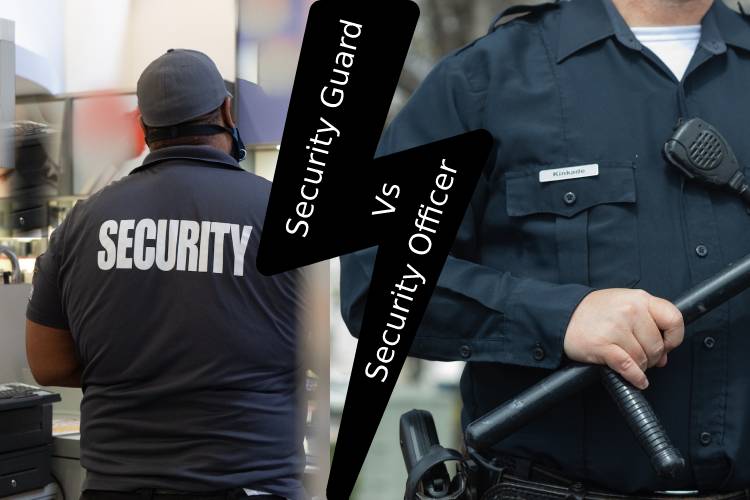
Although both security guards and security officers play a crucial role in maintaining safety, their responsibilities and levels of authority differ. While their core objective remains the same, the hierarchy and job responsibilities distinguish these two roles. Understanding the difference between a security guard and a security officer helps clarify their distinct functions within an organization. Who is a security guard? A security guard holds a lower-ranking position and generally operates under the supervision of a security officer. Their role focuses on monitoring, patrolling, and enforcing security measures as directed. While training requirements may vary depending on the employer, security guards typically do not undergo the same rigorous training programs as security officers. Who is a security officer? A security officer is responsible for overseeing a team of security guards, issuing directives, and ensuring the proper execution of security protocols. Due to their experience and expertise, security officers may also be tasked with training and mentoring security guards. Their role requires strong leadership skills and a comprehensive understanding of security management. Differences between a security guard and a security officer: Posting A security officer is not assigned to a fixed post, such as the entrance gate of a corporate office, for conducting routine inspections. Instead, a team of security guards carries out these responsibilities under the supervision of a security officer. Reporting A security guard is required to report to a security officer, as officers hold a higher position in the organizational hierarchy. However, security officers do not report to security guards, as their role involves overseeing security operations rather than executing lower-level tasks. Training Security officers undergo intensive training to ensure that all security departments function effectively. In contrast, a security guard’s training is limited to the specific duties assigned to them. For instance, a security guard responsible for maintaining a logbook at an entry point does not require training in other security departments. However, security officers must fully understand all aspects of the security system to manage operations efficiently. Operations Security officers are expected to move between different areas to oversee security operations, while security guards are typically stationed at a fixed location, unless they are mobile guards. For example, a security guard assigned to frisking must remain at a designated checkpoint, while a security officer is responsible for roaming the premises, ensuring CCTV systems function properly, and addressing security breaches such as unauthorized entry or tailgating.