
Updated October 2026 · 5 min read · Reviewed by Safeguard On Demand
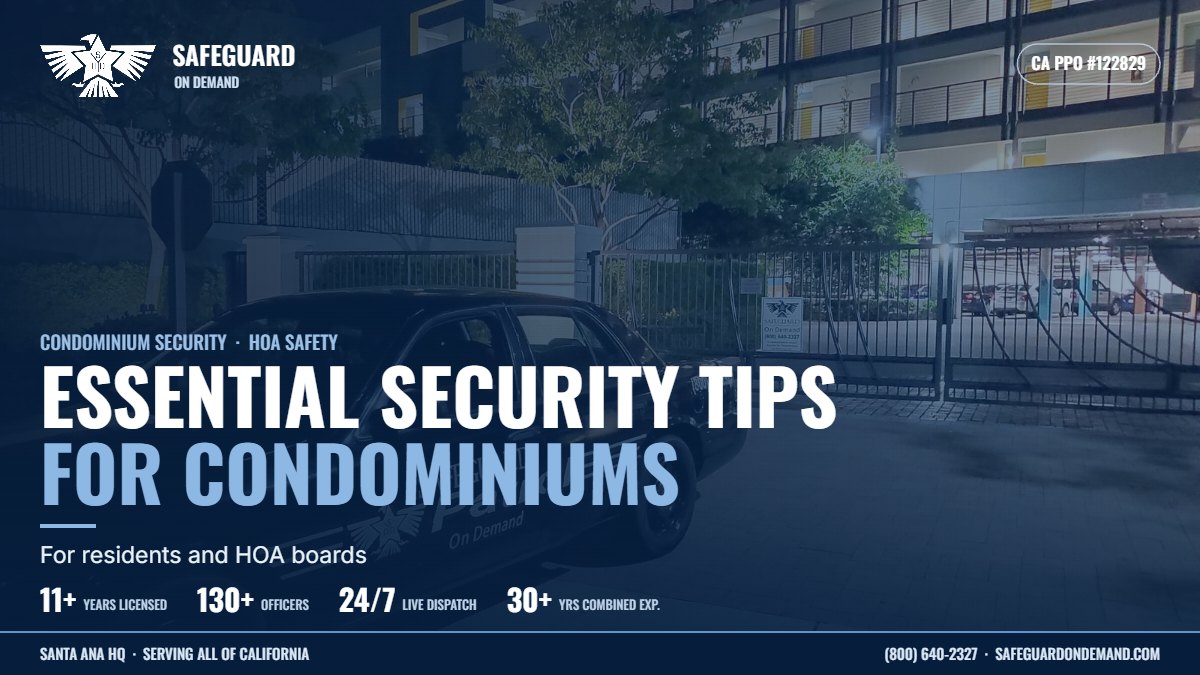
Condominium living offers convenience and community, but shared walls, shared entrances, and shared parking also mean shared security risks. One resident who props open a garage door or buzzes in a stranger can affect everyone in the building.
This guide offers practical security tips for condo residents and HOA boards across California, from simple habits that protect your unit to building-wide measures such as access control, package management, and professional security officers or patrols.
Key Takeaways
- ✓Residents protect the whole building by locking up, preventing tailgating, and reporting concerns.
- ✓Garages, lobbies, mailrooms, and amenities are the most common trouble spots in condo buildings.
- ✓HOA boards should combine access control, cameras, lighting, and clear rules.
- ✓Security officers, patrols, or live monitoring close the gaps that technology and residents cannot.
Security Tips for Condo Residents
Many condo security problems start with small habits. These steps protect your unit and your neighbors:
- Lock doors and windows every time, including sliding doors and windows on balconies and ground floors.
- Do not let strangers follow you in. Politely ask unfamiliar people to use the call box. Tailgating is one of the most common ways intruders enter condo buildings.
- Never prop open doors or gates, even for a few minutes while moving or unloading.
- Secure your parking space and storage. Remove valuables from cars, lock storage cages, and report broken garage gates.
- Manage deliveries. Use package lockers, require signatures for valuable items, or have packages delivered to work.
- Know your neighbors. Neighbors who recognize each other notice when something is out of place.
- Report problems promptly to management or security, including broken lights, damaged locks, and suspicious activity.
Securing Your Unit
Quality locks
Deadbolts on entry doors and secondary locks or bars on sliding doors.
Door viewer or video doorbell
See who is at the door before you open it.
Window security
Locks and sensors on ground-floor and balcony-accessible windows.
Renter’s or HO-6 insurance
Coverage for your belongings and unit improvements.
Travel precautions
Timers on lights and a trusted neighbor to collect deliveries.
Personal alarm or smart sensors
Alerts if a door or window opens while you are away.
Security Priorities for HOA Boards
Boards are responsible for common areas and building systems, and many security issues can only be solved at the building level.
Access control. Use fob or credential systems for entrances, garages, and amenities, and deactivate credentials when residents move out. Rotate gate and door codes on a schedule.
Garages. Garage gates should close quickly behind each vehicle. Add lighting, cameras on entrances and exits, and signage. Garages are a top target for vehicle break-ins.
Lobbies and mailrooms. Restrict mailroom access to residents, add cameras, and consider smart lockers for packages.
Amenities. Post hours for pools, gyms, and rooftop decks and make sure gates and doors self-close and latch.
Lighting and landscaping. Keep entrances, walkways, and parking well lit and trim landscaping to preserve sightlines.
When to Add Professional Security
If your building is dealing with repeated package theft, vehicle break-ins, trespassing in stairwells or garages, unauthorized amenity use, or residents who no longer feel safe, it is time to consider professional security. Options include:
Condo Security Options
| Option | What it provides | Best for |
|---|---|---|
| Concierge or lobby officer | Staffed front desk, visitor verification, package handling | Mid-rise and high-rise buildings |
| Mobile patrol | Randomized nightly checks of garages, entrances, and amenities | Smaller buildings and low-rise communities |
| Remote video monitoring | Live operators watching garages, lobbies, and mailrooms | Buildings with good camera coverage |
| Night officer | On-site presence during high-risk hours | Buildings with frequent incidents |
| Combined program | Lobby officer by day, patrol and monitoring overnight | Larger condo associations |
In a condo building, everyone shares the same front door. When residents stop strangers from following them in and the board puts real coverage on the garage and the mailroom, most of the problems go away.
— David Nawabi
President & CEO, Safeguard On Demand
Working with a Security Provider
Choose a licensed California Private Patrol Operator with residential experience. Ask for a walkthrough, clear post orders, and sample reports. Agree on how residents can reach security, how incidents are reported to the board and management, and how rules such as parking and amenity hours will be enforced. Professional officers handle enforcement courteously, so board members and residents do not have to confront neighbors themselves.
Learn more about apartment and condominium security, concierge security, and common areas that are vulnerable to security lapses.
Condominium Security Across California
Safeguard On Demand is a licensed California private patrol operator protecting condominium associations, HOAs, and residential buildings across Los Angeles, Santa Monica, Orange County, San Diego, the Inland Empire, San Francisco, San Jose, and Sacramento. We focus on security solutions that fit each building and its residents.
Frequently Asked Questions
How can I make my condo more secure?
Lock doors and windows, add a secondary lock or bar to sliding doors, use a video doorbell, manage deliveries carefully, remove valuables from your car, and report broken locks or gates to management.
What is the most common security problem in condo buildings?
Tailgating, where strangers follow residents through secured doors or garage gates, is one of the most common ways intruders get into condo buildings.
Should our HOA hire a security guard?
If the building has recurring theft, trespassing, or resident safety concerns, professional security is worth considering. Options range from mobile patrol to a full-time concierge or lobby officer.
Who is responsible for security in a condo building?
Residents are responsible for their own units and habits, while the HOA is responsible for common areas, entrances, garages, and building systems, as set by the governing documents.
How can condo buildings reduce package theft?
Restrict mailroom access, install cameras, use smart lockers, accept packages at a staffed desk, and include the package area on patrol checks.
Condo security works best when residents and the board work together, with professional support where it is needed. For a security assessment of your building, request a free quote or call Safeguard On Demand at (800) 640-2327.
Get a free security assessment
Licensed armed and unarmed officers, patrols and fire watch across California. Call (800) 640-2327 or request a quote online.